
How old is your dog in galactic years? I mean, we have dog years and cat years for expressing time in the context of human lifetimes. Why not go big?
Many of our time units derive from astronomical cycles. The day is based on Earth rotation. The month hails from the lunar orbit (loosely…forcing an integer number into a year). The year, of course, clocks an orbit around the sun. After that, our ten-finger fetish creates decades, centuries, and millennia. Isn’t it interesting that no such convenient names are available for timescales longer than written human history? If that isn’t diagnostic of myopia, I’m not sure what is! Deep time is obsolete, to the modern. It’s like saying only the thin film of oil on top of the ocean holds any interest.
But back to the main thread, two other prominent astronomical timescales relevant to Earth arise once peering deeper into time. The first is precession. The Earth’s axis is tilted approximately 23.5° to the orbital plane, currently pointing darned close to Polaris (will be even closer in 2100, within half-a-degree). But the axis itself rotates around the line perpendicular to the orbital plane, tracing a loop on the starry sky with a period of about 26,000 years. Half-a-cycle from now, Vega will be the “north star,” albeit not nearly as close as Polaris gets (enjoy this golden age in the north!).
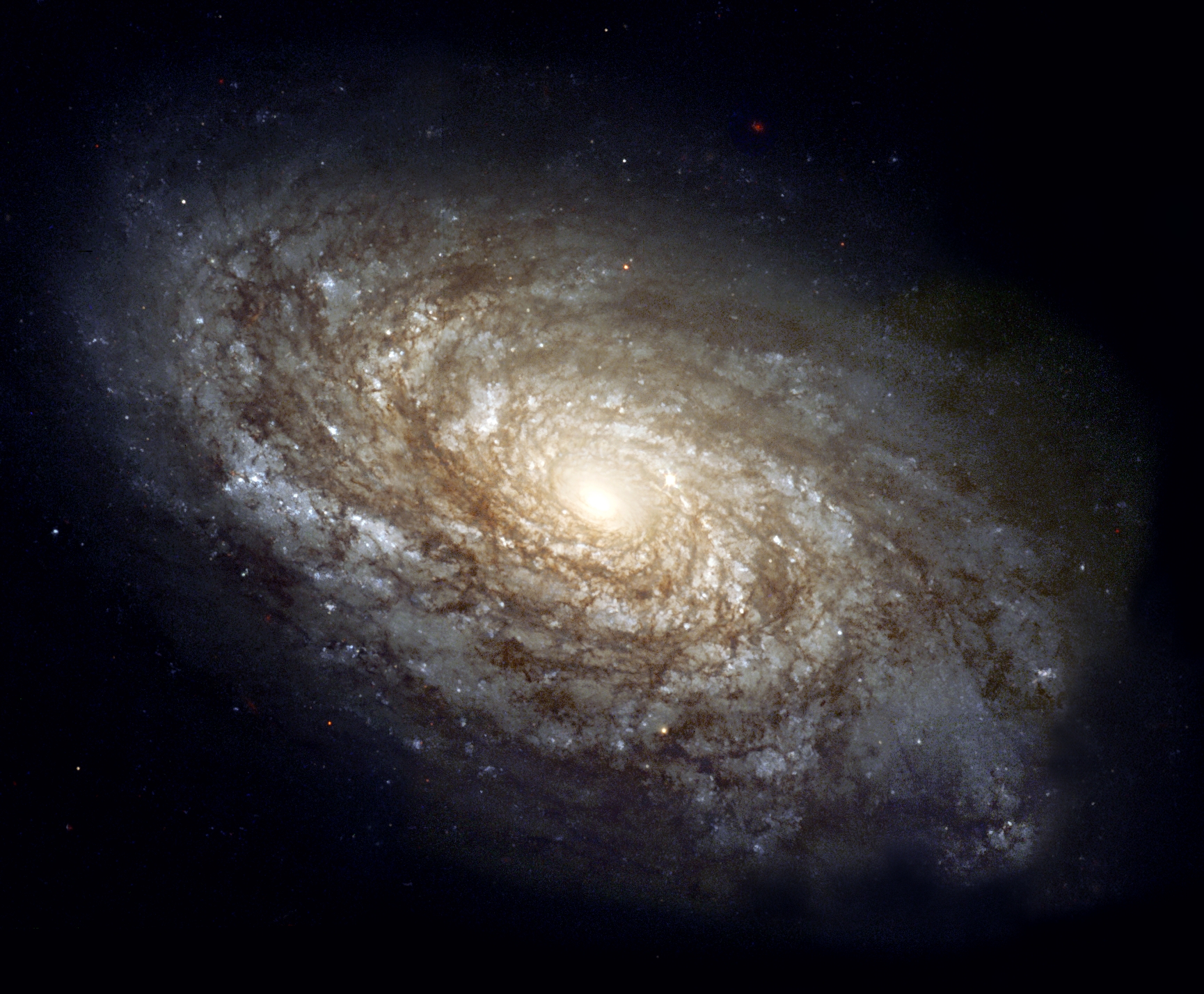
The other natural scale is the period of the solar system’s orbit around the galactic center, as the stars comprising the galaxy swirl under the grip of gravity. The period is about 225 million years.
Let’s cast significant developments in terms of these longer astronomical periods. It isn’t the first time I’ve made temporal analogs, and the reason I come back to it now is that it’s super-important to attain a grip on timescales that really matter. Otherwise, our culture’s extreme emphasis on the recent imposes a hyper-hyper-hyper myopia on us, keeping us utterly ignorant on the ecological front.
Precession Years
In Precession Years (PY), the universe is still quite old, having been around for over half-a-million such cycle times. Indeed, the year 2026 in PY very roughly marks time from the Chicxulub impact that killed off the dinosaurs, so that BC becomes Before Chicxulub on the precession calendar.
Humans have been around in some form since about the year 1910 on this scale (just over 100 precession cycles), and Homo sapiens about 11 years (since 2015). Humans started agriculture about five months ago: it’s still in its infancy, in precession years! Watch out, because infant mortality is a common result in ecological contexts. For reference, a single human lifetime is about a day in precession years: individual humans are like ephemeral mayflies. It is also worth noting that this precession scale isn’t too far from the one used in my “simple story” post from 2022.
Importantly, timescales relevant to ecological assessment in an evolutionary context tend to transpire in tens of precession years. The last few days of industrial modernity, and even the last five months of agriculture simply haven’t had time to be validated.
Galactic Years
The universe has been around for 61 Galactic Years (GY): appropriately approaching old age, in human terms. Earth and Sun are still young bucks, at 20 GY old. Life on Earth is just getting its driver’s license, at age 16.
The Cambrian Explosion is still a toddler, just over two GY old, and the last mass extinction (Chicxulub, again) was only 4 months ago—well short of a complete revolution of the solar system around the galaxy.
Now, humans have been around for about 5 days, and Homo sapiens just half-a-day. This is a great pause point to re-emphasize that evolution (in an ecological context, of course) operates on day timescales, in Galactic Years. Asked if some novelty is going to work out, evology (inseparable collaboration between evolution and ecology) says: “Allow me to sleep on it…”
I presume it’s no surprise what chord I pluck next: agriculture is about 25 minutes old. A single human life lasts about 10 seconds in Galactic Years.
My wife and I have a running joke based on a longstanding pattern that she’ll ask how I like some food item well before my mouth has had a chance to make an assessment. For fun, sometimes she’ll ask before the bite even leaves the fork.
The situation is similar when asking how the Community of Life likes the novelties of agriculture, written language, and modernity in general. “Goddammit! It’s way too early to say. But I will say this: first impressions are that it’s quite vile. My taste buds are going extinct at an alarming rate!”
Let It Go, Newbie!
I get it that for most people in our culture, the implication that long ecological timescales are what really matters is dismissed by a sense that humans have escaped the bonds of mere evolution, are no longer “animals,” and write our own script now. Indeed, it is frighteningly easy to assemble reassuring sentences to that effect inside our brains, as a recent post intoned. The stubborn ignorance is a real spectacle.
The only reason we are here at all—as animals—is that our ancestors co-evolved into an ecological context that sustained their long existence. We can’t come close to touching that degree of “engineering,” because what we call clever is no match for patience over stretches of time difficult to conceive in our puny heads. In a blink, we’ve brought biodiversity to the brink. I suppose one way to learn the hard lesson that we’re not as ecologically separate as the whispers in our brains would have us believe is to experience our own extinction as a necessary victim of a sixth mass extinction. But, of course, by design it’s not a lesson we can hold onto if we no longer exist. And in any case, the ecologically-ignorant masses alive today will be long gone when the piper finally demands payment.
So, don’t be like that. Accept humility. Let go of the false promise of control. Don’t fool yourself into thinking you know better than deep time. You’re just a one-day mayfly, or even just single-digit seconds old on the timescales that govern life on Earth. Reject hubris. We haven’t figured it out. We’ve actually gone backwards where it counts. By forgetting our ecological roots and instead filling our heads with metal and wheels, we’ve become downright dumb while flattering ourselves with the opposite—yet profoundly fallacious—appraisal.
My recommendation: sit with these timescales a bit to let them sink in. Make it real for yourself. You can do a better job than I did at connecting them in ways that make intuitive sense. If successful, you’ll exclaim: “Good god: what the hell are we doing?” I hope it’s not the first time you’ve seen modernity for the naked empire it is.
Views: 1128
"Isn’t it interesting that no such convenient names are available for timescales longer than written human history?"
https://en.wikipedia.org/wiki/Geologic_time_scale#eon
Yes, but these are not fixed numbers of years. No words to continue the progression corresponding to 10,000, 100,000, 1,000,000 (without joining the word "years": no equivalent to decade, century, millennium).
Later edit: words like decamil; centmil, milmil could mirror decade, century, millennium for 10k, 100k, 1M years, but we have no such words. The timescales are beyond modernity's (written history) focus.
It's interesting that, despite the enormous amounts of time you detail the cycles of precession and galactic orbits, you still want to divide such "years" into 365, for days, and a further division of 24, 60 and 60 to get to hours, minutes and seconds.
Still, the most remarkable thing, to me, about this redefinition of time periods is that the universe is only 61 GYs old. Even if the Milky Way had formed immediately after the period of rapid inflation, it would still have revolved only 61 times. Do we know (or can we guess) how many times it has revolved since its formation? Has it revolved enough times that the shape is now more or less fixed? And what of other galaxies?
Please understand that my adherence to familiar conventions is expressly for the purpose of building connections to analogs we all share in modernity. It wouldn't be very effective as a relational exercise if I made up new divisions.
Galaxies are tricky people, forming in stages as collisions and inflows accumulate mass. Rotation changes dramatically throughout this process. The rotation period is also not a fixed number for the galaxy but depends on distance from the center (it's not rigid). So, efforts to define how many rotations the Milky Way has executed won't yield a satisfying, coherent number.
My definition of wisdom is the ability to take the longest view. Also, Richard Dawkins (in 'Blind Watchmaker', I think) writes that the reason he believes people don't understand evolution (not a very difficult idea) is because of the timescales involved.
Wisdom also pairs well with restraint.
Since you mentioned Polaris, here's a fun fact: sharks have lived on earth for about 5x as long as the Polaris has existed – 350MY versus 65MY.
I’ve entertained similar telescoping and microscoping inquiries in terms of both time and scale. Yours is interesting to contemplate, more calculating than my own. An old 70s-era film (remade more recently) called Powers of Ten zooms out then back in to show magnitudes of scale. I’m not aware of an analogue for time.
I have argued that organisms not possessing proto-consciousness or full human consciousness exist in a state of nature one might call the eternal present: a narrow sliver of time that forestalls memory and projection into the future. If one adopts your framing (PT or GT), the momentary nature of human existence might partially explain the hyper-myopia of which you complain. Of course, since humans don’t inhabit the cosmos, galaxy, or even the solar system meaningfully but are instead trapped on Earth, it falls out of scope to think of ourselves in such terms.
Similarly, human memory systems don’t extend further back than about 14K years coinciding roughly with end of the last ice age. Though still conjectural, examination of extant stone monuments apparently built prior to then (e.g., Egyptian pyramids) suggest a sophisticated human civilization lost to memory. Possible exceptions — a surviving antediluvian shared memory — may be various sacred texts that tell, for example, of The Fall and the Great Flood. They’ve been relegated to myth by now but may indeed point to something lost in time.