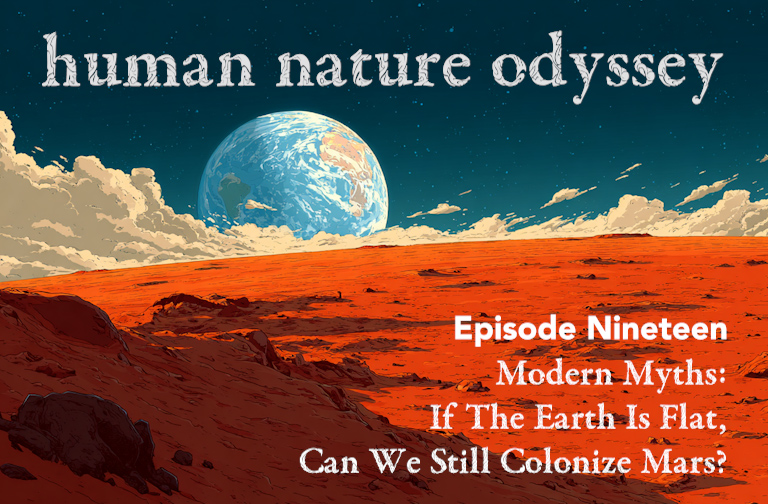
A while back I compared enthusiasts for space colonization with Flat Earth believers, in that they both believe strongly in something that isn’t real, and in the fullness of time may look rather embarrassing. I thought it could be fruitful to contact Daniel Clark, producer of the excellent documentary Behind the Curve about Flat Earth believers, who was on board with a bit of space-bashing. When I mentioned this to Alex Leff, the idea for a podcast conversation was born.
You can listen to the hour-long conversation here. In it, we discuss some of the drivers behind odd beliefs, noting the similarities and differences between Flat Earth and space colonization beliefs (hint: one of these crazy ideas is prevalent in our society to the highest levels of wealth and power). I, of course, offer a number of perspectives on the absurdity of the colonization dream. Daniel and Alex work a bit to temper my “you just can’t do it no matter how hard you might want it” with a bit of catering (coddling?) to the unrealistic dreamers, trying to distract them with alternative attractive options, as one might a child. Nothing will stop them from continuing to pine—and failing in the end. Future generations won’t share the misplaced zeal and that will be that. I guess my target audience at this stage isn’t the true believers as much as it is those who might get swept along in their enthusiasm without having ever been exposed to the overwhelming hardships.
I also had a conversation with Derrick Jensen on why we’re not going to space, which he will soon post in a re-launch of his Resistance Radio YouTube channel. For now, this is just a placeholder: I will add a link to the conversation once it’s out. I’ll also put a note in the newsletter to subscribers when that happens.
Finally, I am scheduled to talk about the space fantasy topic with Nate Hagens and DJ White in late February, which I’ll also eventually add here (and notify subscribers).
Views: 1407