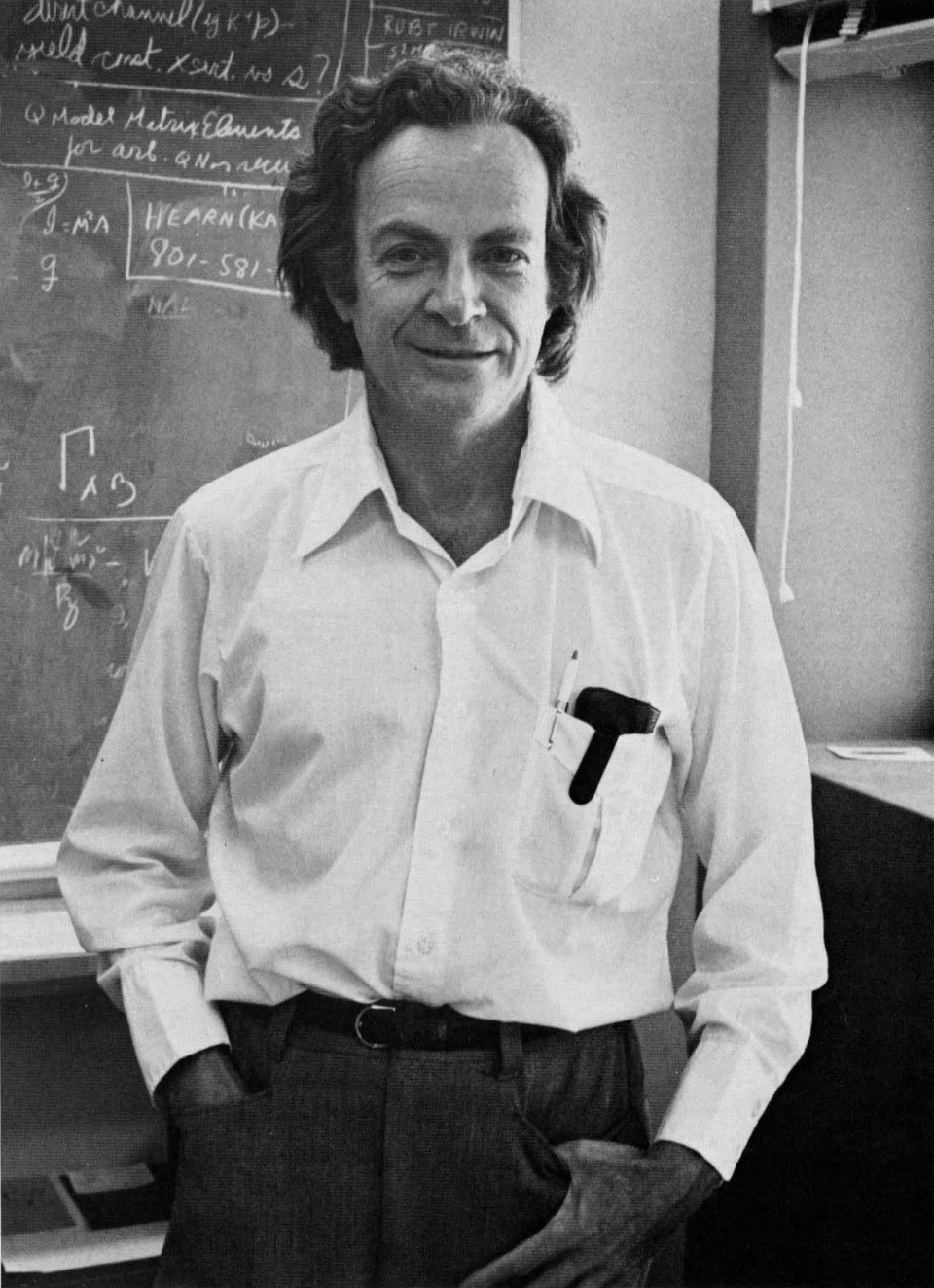
On the second page of the first volume of Richard Feynman’s famous Lectures on Physics (Lecture 1, Section 2), we find the paragraph:
If, in some cataclysm, all of scientific knowledge were to be destroyed, and only one sentence passed on to the next generation of creatures, what statement would contain the most information in the fewest words? I believe it is the atomic hypothesis (or the atomic fact, or whatever you want to call it) that all things are made of atoms—little particles that move around in perpetual motion, attracting each other when they are a little distance apart, but repelling upon being squeezed into one another. In that one sentence, you will see, there is an enormous amount of information about the world, if just a little imagination and thinking are applied.
That sentence exposes another type of sentence: a sort-of prison sentence Feynman was serving—as most of us are—confining us to our cells within modernity. In the Epilogue to my energy textbook, I raised this point and suggested an alternative along the lines of “Treat nature at least as well as we treat ourselves.” It’s sort of a golden rule that extends beyond the usual boundaries of human supremacy. Today I would go further.
As for Feynman, let’s take a look at how one of the broadest thinkers in physics can still be held captive in a narrow rut.
Continue readingViews: 2378