Galactic Time

How old is your dog in galactic years? I mean, we have dog years and cat years for expressing time in the context of human lifetimes. Why not go big?

Many of our time units derive from astronomical cycles. The day is based on Earth rotation. The month hails from the lunar orbit (loosely…forcing an integer number into a year). The year, of course, clocks an orbit around the sun. After that, our ten-finger fetish creates decades, centuries, and millennia. Isn’t it interesting that no such convenient names are available for timescales longer than written human history? If that isn’t diagnostic of myopia, I’m not sure what is! Deep time is obsolete, to the modern. It’s like saying only the thin film of oil on top of the ocean holds any interest.

But back to the main thread, two other prominent astronomical timescales relevant to Earth arise once peering deeper into time. The first is precession. The Earth’s axis is tilted approximately 23.5° to the orbital plane, currently pointing darned close to Polaris (will be even closer in 2100, within half-a-degree). But the axis itself rotates around the line perpendicular to the orbital plane, tracing a loop on the starry sky with a period of about 26,000 years. Half-a-cycle from now, Vega will be the “north star,” albeit not nearly as close as Polaris gets (enjoy this golden age in the north!).

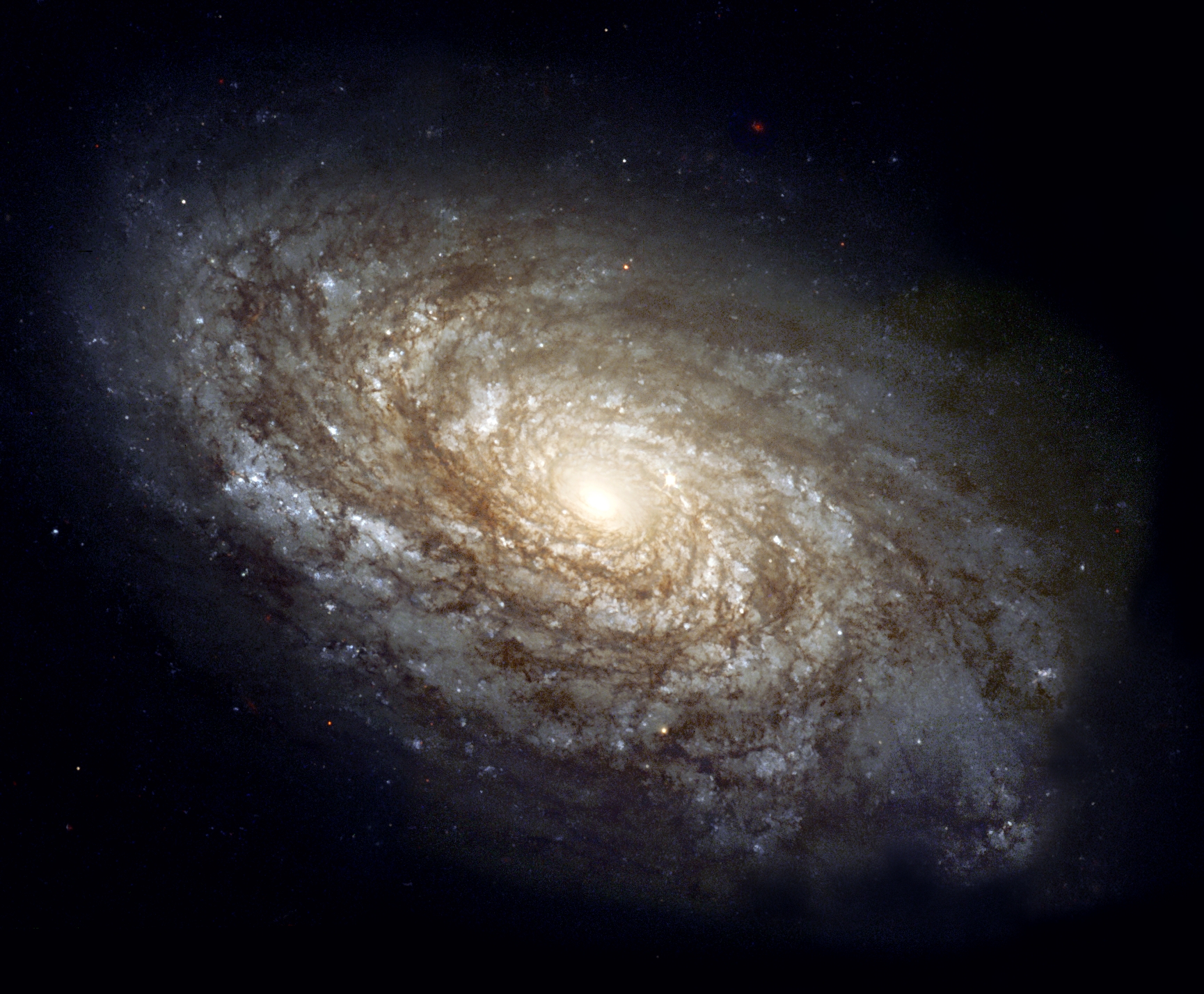
The other natural scale is the period of the solar system’s orbit around the galactic center, as the stars comprising the galaxy swirl under the grip of gravity. The period is about 225 million years.

Let’s cast significant developments in terms of these longer astronomical periods. It isn’t the first time I’ve made temporal analogs, and the reason I come back to it now is that it’s super-important to attain a grip on timescales that really matter. Otherwise, our culture’s extreme emphasis on the recent imposes a hyper-hyper-hyper myopia on us, keeping us utterly ignorant on the ecological front.

Continue reading

Views: 580

A Lawful Anarchist

You know me: I’ll go after almost any aspect of modernity, including technology, agriculture, or even written language. Let’s now take a big swipe at “The Law.” But first, we’ll need to get a few common reactions out of the way.

When I suggest that a rigid, codified legal system is an abomination that humans are better off not suffering, strong objections instantly arise on the basis that a lawless modernity would be a chaotic nightmare for all sorts of reasons.

I totally agree: modernity absolutely needs a legal system in place. So, sure: anarchy is no way to run modernity, but here’s the catch: modernity is no way to run humanity, or life on Earth more generally. Modernity, it appears, initiates a sixth mass extinction, and is thus effectively synonymous, just as unsustainable is synonymous with failure. Modernity has no deep-time ecological vetting, and is a transient offshoot that has—in a relative eye-blink—caused tremendous disruption to the prospects for a happy life for countless members of the Community of Life, including, of course, future humans.

So, ask not what modernity needs, because doing so is basically asking what the sixth mass extinction needs. As far as anyone knows, and certainly as the actual evidence reveals, the two are inseparably part of the same phenomenon. So, let’s get over prioritizing what modernity needs. Laws are among those “necessities” of the sixth mass extinction—a.k.a. modernity.

Continue reading

Views: 1391

Cerebral Disconnect

Cerebral contents pale in complexity and significance within the greater ecological universe.

Why are worldviews so drastically different? Why is it that obvious truths to one person can seem like unhinged insanity to another? The incongruity can be especially pronounced when pertaining to divergences among people who are clearly smart and well-educated.

The last month or so has been dedicated to posts airing the moderated conversation I had with Dave Murphy about whether technology saves modernity or the whole enterprise lacks viability. The net result is probably best described as an impasse: neither of us seemed to move very far from discordant starting positions.

This post contains a bit of musing about the foundations underpinning the disconnect. Because it comes out of my meat-brain, it’s likely all wrong—but it’s the best I can come up with. Maybe the general principle advanced here applies to other disconnects we encounter with others, to some degree. In a sense, it’s all in our heads.

Continue reading

Views: 1207