Flex-Fuel Humans

[An updated treatment of some of this material appears in Chapter 20 of the Energy and Human Ambitions on a Finite Planet (free) textbook.]

If you’re one of those humans who actually eats food, like I am, then a non-negligible part of your energy allocation goes into food production. As an approximate rule-of-thumb, each kilocalorie ingested by Americans consumes 10 kilocalories of fossil fuel energy to plant, fertilize, harvest, transport, and prepare. The energy investment can easily exceed a person’s household energy usage—as is the case for me. But much like household energy, we control what we stick in our mouths, and can make energy-conscious choices that result in substantial reductions of energy consumption. I now call myself a flexitarian, a term acknowledging that my body is a flex-fuel vehicle, but also that I need not be rigid about my food choices in order to still make a substantial impact on the energy front.

An earlier post on how many miles per gallon a human gets while walking or biking touched on the fact that fossil fuels undergird our food supply. As a result, walking to the grocery store effectively uses as much fossil fuel as would a typical sedan. The lesson is not to walk less, but to change that 10:1 ratio for the better by eating more smartly. Once upon a time, we put less than one kilocalorie of energy into food production per kilocalorie obtained (or else we and our draft animals would have starved to death). So the 10:1 ratio is not at all inescapable, and depends strongly on the foods we choose to eat.

Continue reading

Views: 45439

Easing Off the Gas

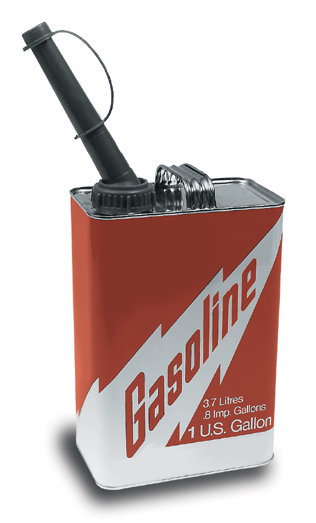
The Do the Math blog series has built the case that physical growth cannot continue indefinitely; that fossil fuel availability will commence a decline this century—starting with petroleum; that alternative energy schemes constitute imperfect substitutes for fossil fuels; and has concluded that a very smart strategy for us to adopt is to slow down while we sort out the biggest transition humans have ever faced. The idea is to relieve pressure on the system, avoid the Energy Trap, and give ourselves the best possible chance for a successful transformation to a stable future. Since building this case, I have described substantial adaptations in our home energy use, but have not yet addressed the one that bears most directly on the immediate problem: transportation and liquid fuels. Let’s take a look at what can be done here.

Continue reading

Views: 4078

Exponential Economist Meets Finite Physicist

[An updated treatment of some of this material appears in Chapter 2 of the Energy and Human Ambitions on a Finite Planet (free) textbook, also mirrors a 2022 article in Nature Physics..]

Some while back, I found myself sitting next to an accomplished economics professor at a dinner event. Shortly after pleasantries, I said to him, “economic growth cannot continue indefinitely,” just to see where things would go. It was a lively and informative conversation. I was somewhat alarmed by the disconnect between economic theory and physical constraints—not for the first time, but here it was up-close and personal. Though my memory is not keen enough to recount our conversation verbatim, I thought I would at least try to capture the key points and convey the essence of the tennis match—with some entertainment value thrown in.

Cast of characters: Physicist, played by me; Economist, played by an established economics professor from a prestigious institution. Scene: banquet dinner, played in four acts (courses).

Note: because I have a better retention of my own thoughts than those of my conversational companion, this recreation is lopsided to represent my own points/words. So while it may look like a physicist-dominated conversation, this is more an artifact of my own recall capabilities. I also should say that the other people at our table were not paying attention to our conversation, so I don’t know what makes me think this will be interesting to readers if it wasn’t even interesting enough to others at the table! But here goes…

Continue reading

Views: 99097

Heat those Feet!

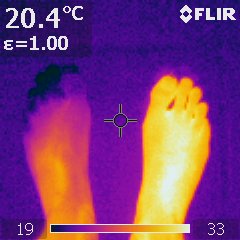
Infrared image of a cold left foot (25°C with 19°C toes), compared to a warm (33°C) right foot.

One of the more bothersome aspects of living in an unheated house (with tile floors in much of the house, in my case) is having cold feet. Spring has arrived, so perhaps this post is not as timely as it might otherwise have been. But let’s consider the energy costs of various approaches to warming up cold feet.

The main problem I have with cold feet is that they make it hard to go to sleep. Otherwise cold feet don’t seem to distract me from normal activities. But let’s say that your feet are cold and that you cannot stand it any longer, and therefore must warm them up. I’ll look at a number of options, assessing how much energy is consumed for each. We’ll try hot water in the sink, a space heater (or blow dryer) under a blanket, a heating pad wrapped around the feet, or good-old metabolic energy.

Continue reading

Views: 20294

The Phantoms I’ve Killed

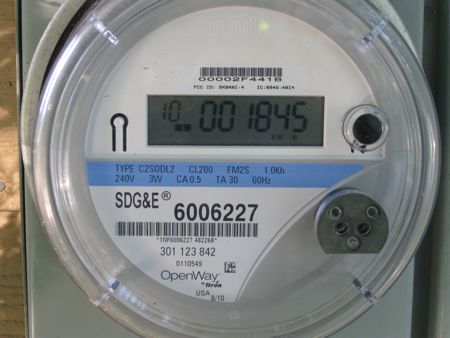
Two weeks ago, I described my factor-of-five reduction of natural gas usage at home, mostly stemming from a decision not to heat our San Diego house. We have made similar cuts to our use of utility electricity, using one-tenth the amount that comparable San Diego homes typically consume. In this post, I will reveal how we pulled this off…with plots. Some changes are simple; some require behavioral changes; some might be viewed as outright trickery.

Continue reading

Views: 14643

OilPrice Interview

If you’re interested, oilprice.com posted an interview polling my take on energy alternatives and related issues.  Regular Do the Math readers have likely heard much of it before, but perhaps will enjoy a different packaging…

Views: 1315

Space-Based Solar Power

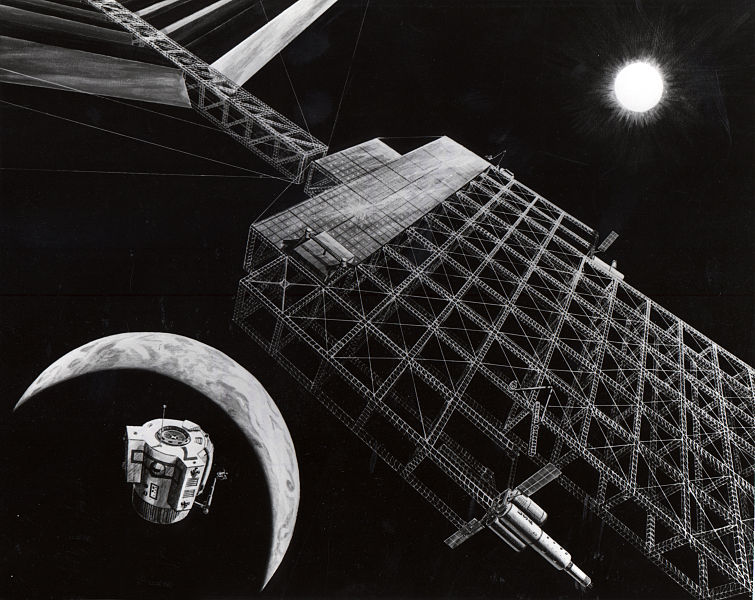
A solar panel reaps only a small portion of its potential due to night, weather, and seasons, simultaneously introducing intermittency so that massive storage is required to make solar power work at a large scale. A perennial proposition for surmounting these impediments is that we launch solar collectors into space—where the sun always shines, clouds are impossible, and the tilt of the Earth’s axis is irrelevant. On Earth, a flat panel inclined toward the south averages about 5 full-sun-equivalent hours per day for typical locations, which is about a factor of five worse than what could be expected in space. More importantly, the constancy of solar flux in space reduces the need for storage—especially over seasonal timescales. I love solar power. And I am connected to the space enterprise. Surely putting the two together really floats my boat, no? No.

I’ll take a break from writing about behavioral adaptations and get back to Do the Math roots with an evaluation of solar power from space and the giant hurdles such a scheme would face. On balance, I don’t expect to see this technology escape the realm of fantasy and find a place in our world. The expense and difficulty are incommensurate with the gains.

Continue reading

Views: 17176

Home Heating for the Hardy

Sleeping warm

If you are on-board with the sentiment that we should strive to reduce the amount of energy we consume as a means to relieve pressure on a world suffering impending energy scarcity, then you probably want to know how one might proceed. In this post, I will describe the single-biggest energy-saving strategy I have employed in my home in the past five years, which slashed my natural gas consumption by almost a factor of five.

Last week, I described how to read gas meters, in the process discovering how onerous pilots lights can be. As a result of initial exploration of my energy footprint in the spring of 2007, I shut off the furnace pilot light for the summer, which I figured accounted for two-thirds of my warm-season natural gas use. When winter came, my wife and I challenged ourselves to hold off on re-igniting the pilot light until it got too cold for us to bear. That day never came. The result was a dramatic reduction in natural gas use.

In this post, I will talk about some of the ups and downs of adjusting to a colder house in the winter. Granted, we live in moderate San Diego, and could not get away with the same tactic in many locales. Even so, I will quantify the gains one might expect elsewhere for similar living conditions.

Continue reading

Views: 17789

Pilot Lights are Evil

familyhandyman.com

My personal journey into home energy reduction began with taking stock of past energy use as reported on my utility bills. I quickly migrated toward reading the meters directly to gauge the impact of particular activities. What I learned from our gas meter shocked me, and ultimately led to our single-biggest energy-saving behavioral shift. I’ve already ruined any hope of suspense in the title of the post, but just how bad does something have to be before I’ll resort to a word like “evil?” And how bad are your own demons? Ah—now you can’t wait to find out!

Continue reading

Views: 27553

My Great Hope for the Future

So far on Do the Math, I’ve put out a lot of negative energy—whatever that means. Topics have often focused on what we can’t do, or at least on the failings or difficulties of various ambitious plans. We can’t expect indefinite growth—whether in energy, population, or even growth of the economic variety. It is not obvious how we maintain our current standard of living once fossil fuels begin their inexorable decline this century. And as I’ve argued before, achieving a steady-state future implies approximate equity among the peoples of the Earth, so that maintaining today’s global energy consumption translates to living at one-fifth the power currently enjoyed in the U.S.

In this post, I offer a rosy vision for what I think we could accomplish in the near term to maximize our chances of coming out shiny and happy on the tail end of the fossil fuel saga. I’m no visionary, and this exercise represents a stretch for a physicist. But at least I can sketch a low-risk, physically viable route to the future. I can—in part—vouch for its physical viability based on my own dramatic reductions in energy footprint. I cannot vouch for the realism of the overall scheme. It’s a dream and a hope—a fool’s hope, really—and very, very far from a prediction or a blueprint. I’ve closed all the exits to get your attention. Now we’ll start looking at ways to nose out of our box in a safe and satisfying way.

Continue reading

Views: 13541