Ditching Dualism #5: Revolutions

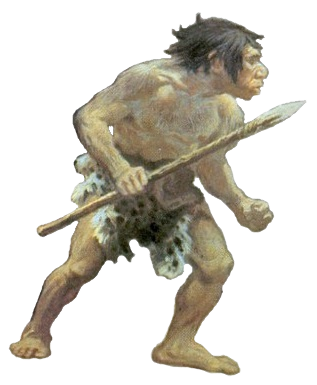
Early depiction of evolution (Wikimedia Commons).

In this quest to move past dualism, it may be useful to examine a few key revolutions that corrected erroneous and sometimes damaging perspectives in the past. I hope to cast dualism in a similar mold: eventually to be abandoned as an embarrassing, destructive, and self-centered phase of adolescent excess.

We’ll consider common elements of past beliefs (flat earth, geocentric, creationist) that most eventually moved beyond, and see that dualism shares many of the same traits of anthropocentrism and missing context.

Past Prevailing Paradigms

We’ll start with Flat Earth beliefs, as touched on in the previous post. In all likelihood, more than one human over the hundreds of thousands of years prior to the agricultural period imagined the sun and moon to be spheres (illumination of lunar phases as a pertinent clue), and assumed the same to be true for Earth. The Greeks convinced themselves that Earth was round, and even estimated its circumference based on shadow lengths at the summer solstice. Astute sailors knew something fishy was afloat well before the voyage of Columbus, based on how ships and land reliably sink below the horizon as distance increases. Yet Flat Earth belief prevailed until recently. Part of the point is that adoption is not monolithic or simultaneous. Most people still had no need for anything but a Flat Earth model. Restricted to a small locale, the larger truth was neither evident nor relevant. That’s what counts for effective mental models. A Flat Earth model is not at all inappropriate, in a limited context. All mental models are incomplete and wrong in some way(s), after all.

Continue reading

Views: 633

Ditching Dualism #4: Going Mental

Since this series aims to confront dualism in its primary form as a mind/matter split, we should devote some time to mental matters. What are the central arguments for mind—or associated consciousness—as a phenomenon unto its own, not “reducible” to mind-numbingly complex material interactions (just reducible to a label of “mind,” apparently; simpler!). What is it, in fact, that we do with our brains, and how much of it depends on matter (i.e., physiology)?

Subjectivity: What it’s Like

At its core, belief in mind rests on the truth that one individual can’t experience another’s “inner” experiences. Language helps tremendously in providing a foggy window into others’ experiences. And while clumsy, language does at least help to confirm predominantly-similar sensations among humans. Yet even via language, how can we really know what another’s pain feels like? How can we know that seeing blue feels the same to them as it does to us? We can’t, really. And since individual life-experiences create differing associations within each of us, the full impact of seeing (or imagining) the color blue is surely a bit different from individual to individual. To my dad, it meant the Kentucky Wildcats, for instance.

Continue reading

Views: 2083

Ditching Dualism #3: The Divorce

Dualists have a foot in each camp, precariously.

Having prefaced this series on dualism with a clarifying exaltation and a grounding in animism, we’re ready to roll up our sleeves and trace the origins of dualism.

Animist tendencies have to be stamped out of children in our culture, who display a natural proclivity to treat the entire world around them as alive and full of potential friends. They soon learn from acculturated adults the sin of anthropomorphism. “Stop talking to that stool and inviting it for tea! Don’t dare project human greatness onto mere ‘things’—or even animals. No, not even Boots, the family pet. Yes, technically humans are animals, but that’s just a quirky fact, not how we should act.” Indeed, we do a number on our kids, molding them into fine little human supremacists.

Viewing rocks and weather and rivers as part of a single, unified co-dependent Web of Life, animists are somewhat allergic to both supremacy and hierarchy. Humility is the watchword. We don’t and can’t understand enough to call ourselves superior, voiding any case for ranking. Many cultures recognized humans’ newbie status and explicitly looked for wisdom in our elder relatives: the plants and animals, who knew how to live in “right relationship” with each other and with the planet—tested over eons.

This aversion to hierarchy went hand-in-hand with “fiercely egalitarian” social practices—wherein everyone had essentially equal access to food and its means of procurement. Various “leveling mechanisms” were employed deliberately and explicitly to prevent the emergence of instability resulting from power concentration. Demand-sharing and jocular meat-shaming were common practices in this vein, all the way to banishment or death for dangerous aggrandizers (see also earlier, related work from Hayden). As Christopher Ryan phrases it in Civilized to Death, “There’s plenty of ferocity in the ‘fierce egalitarianism’ of foragers.”

So, what happened to upset this long-standing social order?

Continue reading

Views: 2321

Ditching Dualism #2: Animism

Tell this rock it’s not alive! From Wikimedia Commons.

In this second part of our journey to dump dualism, we peek at the ancient worldview of animism. Why this additional detour before getting to dualism itself? Two answers come to mind. First, it’s valuable to know what pervaded long before dualism swept in. Second, some aspects of animism might provide an appealing alternative—and in so doing might stave off the sense of nihilism and lack of meaning that can accompany the contemplated abandonment of an entrenched worldview. In other words, it’s nice to have another lifeboat at the ready—especially one as time-tested as animism—before asking someone to step off their current, familiar platform.

Rather than being a religion, animism is a mindset that had common purchase around the globe prior to modern times. Not only is it important to appreciate how we used to be when the planet’s ecological relationships were more “normal,” but it offers a worthy alternative to dualism that has much overlap with an astrophysical perspective.

Animism is contrasted with the prevalent scala naturae, or Great Chain of Being, as fabricated by Greek philosophers during modernity’s early adolescence. This ladder-ranking schema places humans awkwardly straddling the domain of superior angels/gods and that of “lower” animals and plants. Note that this is an implicitly dualist framing, separating the heavenly from the earthly—humans of course having access to both at once: a foot in both camps.

A persuasive argument has it that this perceived separation from the earthly domain took root in agricultural practices, whereby cultures began to aggressively manipulate and control “lower” life, as its domesticating masters. Abrahamic (monotheistic) religions explicitly grant dominion of Earth and its lesser inhabitants to a culture of ordained human supremacists.

Continue reading

Views: 2967

Ditching Dualism #1: Exaltation

Image by Amore Seymour from Pixabay

By elevating human experience above the remainder of the universe, dualist beliefs can impede efforts to move past modernity—which I believe must end whether we wish it or not. Therefore, it seems important enough to devote some time to the matter. The first question one might ask is: “Am I a dualist?” A crude test involves answering the following questions:

  1. Is matter real (not a creation of mind), obeying physics independent of consciousness?
  2. Is mind/consciousness its own phenomenon, not a product of known matter and physics?

Here’s how I would label the results: Y/N is materialist (like me: mind is matter); N/Y is idealist (mind is everything); Y/Y is dualist (mind and matter separately real), and N/N is too bizarre for me to confront. “Maybe” answers are okay, too, but perhaps this series will result in greater clarity.

The topic of dualism is too important and too stealthily integrated into modern worldviews to be handled in a post of ordinary length. Maybe a book would be better, but I’m going to be lazy and parcel it out as a series of posts. I recognize that what I am attempting is very tricky, and probably insufficient to persuade anybody—we do get set in our beliefs (although I was once a default dualist, and still squirm at some of the implications of abandoning this comfortable, safe, and culturally reinforced position). All the same, I will try to anticipate failure modes and navigate around them before they seize the reader.

The larger effort here benefits from first establishing a starting position before even getting to the main topic of dualism. I hope it helps build a coherent framework, perhaps establishing deep resonance, connection, and trust before trying to extract the toxins. Of course, I may lose some people even in trying to establish a foundation, but I find I’m most interested in building something among those who start off with admiration for the universe we are lucky enough to inhabit. The others may be beyond reach.

The motivation for starting with an exaltation to the living world is mainly that I will ultimately be making the case that we find ourselves in a material universe, and that the only non-dualistic way to take this seriously is to have microbes, fungi, plants, and animals (including humans, of course) be entirely material beings. For many, this elicits distaste over the notion that humans and animals are “just machines,” and thus don’t deserve any more regard than a calculator. This hasty conclusion misses something enormous, and I thought it important to begin by expressing complete admiration for Life (which I even tend to capitalize, mimicking the convention for God). If being “only” material would seem to make a living being worthless, I hope by the end of the series the reader will understand this to be a failure of scope and not at all a necessary conclusion.

Continue reading

Views: 3494

Atomic Humans

Some themes appear to exert a magnetic pull on my attention: I keep coming back to them and often feel like I’m on a treadmill. It’s hard to figure out why: why am I compelled to keep these topics alive? A recent insight ties some of it together.

Years ago, I wrote a post called A Physics-based Diet Plan. The premise is that humans do not create or destroy atoms within their bodies, and that the energetics are too minuscule to register measurable mass–energy conversion. As such, a person’s mass change—as measured on a bathroom scale, for instance—from one day to the next is completely captured by the difference of mass inputs and mass outputs. It’s just atoms in and out.

Now, the human body has many channels for mass loss. Bathroom functions, breathing (net carbon/water loss really adds up!), and perspiration being the main mechanisms. Mass gain is almost entirely through our pie-holes. And entry via that channel is almost always facilitated by a hand delivering food to the mouth under the control of a brain. If you want to lose weight, the directive is simple: eat less and breathe more. In other words: diet and exercise. I know: radical, right? Every successful program for weight loss involves essentially this same advice, in various guises. That’s because it’s just atoms in every single case, at the foundational level. But oh boy, you wouldn’t believe the resistance I get to this framing. Let’s talk about that…

Continue reading

Views: 3633

Nursery Rhymes

Humpty Dumpty sat on a wall. Image by Loren Elkin from Pixabay

We all appreciate that human individuals progress through stages of cognitive development on the way to adulthood. A toddler is simply not equipped to run a country (hold your quips): the brain hasn’t fully developed. Infants love the game of peek-a-boo precisely because they have not yet cemented the idea of object permanence. Language capability improves over many years—decades, actually. Brains are not “fully” developed until the late twenties (yet assert mastery starting in the teen years).

But, what does “fully” developed mean? It means significant further development in structure or capability is not to be expected. Does it mean that brains reach some theoretical ultimate capability—no more improvements possible—or do they maybe stop short of perfection? Why would evolution produce anything substantially better than what provides sufficient selective advantage in an ecological context, in simultaneous consideration of all other organism attributes and the biodiverse and social environments in which they operate? The tangled difficulty of that sentence barely hints at the immense contextual complexity involved.

So, every last one of us ceases brain development well short of some notional limit. Does that stopping point cross the threshold of being able to master all knowledge or understanding about Life, the Universe, and Everything? Of course not. Evidence abounds. So, we will never comprehend it all, given our limited meat-brains.

All this echoes things I’ve said before. What’s new in this post is what I hope will be a helpful analogy to how adults present ideas to children possessing less-developed brains—thus the Nursery Rhyme title. Since adult human brains also stop short of “full” development, how might we expect our imperfect brains to interact with what we can’t fully understand? We encounter this conundrum all the time in giving “sufficient” accounts to children that are effective, even if they must be over-simplified or distorted to get the point across. So, how would a hypothetical species possessing far more wisdom explain the incomprehensible to us, as if we were children to them?

Continue reading

Views: 5431

Decisions, Decisions

Which way will the coin decide to land? Image by ICMA Photos.

In my continuing pursuit of humility as an antidote to modernity’s human supremacy illness, the atoms that constitute who I am take issue with lofty and self-aggrandizing concepts of idealism, dualism, and free will—replaced by the unflattering material world and its staggering wealth of emergent complexity. I have argued that opposite of lacking imagination and being reductionist, such a view far exceeds our imaginative capacity and is in fact rather expansive and open-ended next to facile short-cut cop-outs that sweep mind-boggling complexity under the rug by pretending that constructs like mind, consciousness, soul, God, or Santa Claus are real.

One stubborn sticking point is the beguiling illusion that “we” are separate from “our” corporeal bodies, owning and controlling them, somehow. This notion is prevalent, despite zero evidence that we are anything but corporeal, and heaps of evidence to the contrary. A less supremacist variant allows that all life, down to microbes, are endowed with this material override to exert control and autonomy over their environments, but still demand a line of separation between life and inanimate collections of matter. An amoeba suddenly changing course in reaction to its environment is, in this view, ontologically different than a hurricane changing course in reaction to its environment.

Granted, life is amazing and exhibits unambiguous behavioral differences compared to, say, rocks (hint: check the complexity of internal structure). A materialist, mechanistic basis does not in any way diminish life, although that’s often the regrettable reaction from someone who takes it on faith that transcendent mystery accounts for life’s splendor—rather than intuition-busting eons of emergent material fabulousness. Well, it turns out that life is incredible no matter what inconsequential thoughts we form about it. In any case, the point that I will develop in this post is that “decisions” are carried out at every level from electrons to ants, but are at no point fundamentally operating on a different basis.

Depending on how one defines “decisions,” either electrons and bats carry them out by the same rules, or neither can be said to be making “free” decisions. Whatever the case, electrons and bats are on similar footing when it comes to “decisions,” albeit at vastly different scales of complexity. Given enough information and background, the decisions by either are not surprising, even if not precisely predictable. Now, I do identify a difference between living decisions and inanimate decisions, importantly, but it’s a subtle one that I’ll wind my way toward.

Continue reading

Views: 16165

Shortcut Brains

Brains. What are they good for? Why do we—and loads of other animals—have them? What is the point of evolving increased neural complexity? Brains obviously confer advantages, or they would not survive the gauntlet of evolution. They must also exact a cost, or every creature would boast a headpiece of enormous potential. If every living being had a giant brain—or even a modest one—the ecological web of life would surely fail, so that brains are a niche evolutionary strategy possessed by a small minority of species, enabled only by the presence and support of the whole.

Early brains—and I’m thinking worms, here—facilitated regulation of bodily functions, and humans preserve those essential features in the brain stem. Reptiles developed the capability for more complex calculations, assessing a number of simultaneous inputs to guide decisions of fight or flight, for instance. Selection (evolution) saw to it that these calculations were, on average, functionally “correct,” becoming more nuanced over time. We, too, preserve these well-honed instincts deep in our brain structure. As animals evolved (e.g., mammals, but not exclusively so), they developed a cerebral cortex and limbic system to navigate social arrangements and better adapt to varying conditions. This is where emotions originate. Some mammals then doubled-down on this nifty cerebrum thingy to develop a neo-cortex with all sorts of cool lobes (like the frontal one) capable of forming ever-more sophisticated mental models of the wider world—allowing flexible adaptation informed by years of development and model-building during a long process of individual maturation. Among other things, culture arises from this cerebral capability (culture being socially-learned behaviors that are not stamped in genetically, as practiced by many social animal species).

In short, brains serve to form mental models of the world that help us flexibly adapt and survive. Our models are not constrained to be correct, as long as they are useful in some functional, adaptive, average sense. I’ve taken to using the term “meat-brains” to help drive the point that brains are just organs—however sophisticated—and to poke at our cultural worship of brains, to the point of being dismissive of any life not boasting comparable cognitive capacity. But having a large brain is not everything, and in fact has demonstrated itself to be one of our greatest liabilities—by conceiving and enacting modes of living not ecologically contextualized and vetted to, you know, actually work in the long term—to the tune of initiating a sixth mass extinction. Like any evolutionary adaptation, it can be taken too far.

Incidentally, I wrote this and last week’s post roughly in parallel a few weeks back, and did not carefully coordinate their order of appearance: they might have been arranged either way. Some themes are common to both, but they might be thought of as siblings that belong together.

Continue reading

Views: 3770

A Mind-Blowing Leap

Image by Shelley Evans from Pixabay

As I settle into and continue to explore the perspective that modernity is destined to fail, was never a long-term-viable idea, and therefore represents a giant blunder, I keep running into thoughtful writings about what exactly went wrong, at its foundations.

A recurrent culprit—and I tend to agree—involves human supremacism (anthropocentrism), connected to a perceived separateness from nature. This separateness relates to a dualism that began with agriculture, eventually finding full expression during the Enlightenment. Its Enlightenment framing, chiefly associated with Descartes, drives a wedge between mind and matter—as different “substances,” for instance. Thus, while not my main interest, I keep getting routed back to the question of “mind,” as it continues to be a sticking point in dismantling the dualism that is generally agreed to get in the way of appropriate ways of living on this planet.

So, this post is about mind and consciousness, offering my reactions. Now, I should be clear that it doesn’t really matter if we arrive at the Correct Truth on this issue, to the extent that the recommendations emerging from whatever framework result in better alignment to the living world. Any prescription that advocates humility, right-relationship, reciprocity, being part of a whole—fantastic! I may have suspicions and disagreements about the underlying metaphysics, but who cares, in the end? Surely multiple paths can lead to similar ends. Thus, I don’t want to die on that hill, or subvert migration to a better way of living in a crossed-arm philosophical sulk. Nor do I wish to see efforts that claim theirs is the only way, rooted in Truth. Who are we to demand knowing the ultimate truth, anyway? Why should we—or any creature of evolution—expect to? Humility, remember?

Indigenous cultures adopted a diverse universe of stories upon which their well-integrated practices rested, and that’s all for the good—even if the stories are not True in a modern sense. What matters is the practices and attitudes the stories motivate. I suspect that we can likewise tolerate a diversity of metaphysical underpinnings, to the extent that they allow compatibility with the community of life.

That said, I will now address what I see as an unfortunate tendency in the drive to abolish dualism. Maybe it can lead to similar, good outcomes, but I worry that it preserves a tinge of supremacy, while failing to destroy the chief horcrux of dualism. Be prepared to lose your mind, as I have done.

Continue reading

Views: 6879