Here We Are

I was asked some months ago by the Australian Foodweb Education organization to participate in their Here We Are project. The idea is to reflect on the statement: “Here we are, alive, at this moment, in this place, together.”

Over the course of several months, I occasionally tried a written-form response, which might later form the basis for a recording. But I was never quite happy with the result—in part because my viewpoint has been rapidly evolving, making it hard to be completely satisfied.

Finally, in April, I felt ready. So I sat on a grassy slope in La Jolla soaking in a chorus of frog song and jotted down bullet points in some semblance of order. I am not talented enough to read a script without it sounding like I’m reading a script, so kept it light. But when I got to my office to make a recording, I wrote the prompt on my whiteboard and realized I could dissect the sentence in a way that captured my perspectives pretty well. I was able to adapt most of the frog-inspired points into something that seems well designed, but in truth emerged rather rapidly.

For my zoom-recorded session background, I chose from the two or three stock images one that both reminds me of the grassy slope where I committed ideas to paper, and fittingly puts me in my place with respect to nature.

Okay—that’s enough backstory. Here is the video recording, and what follows is a relatively faithful transcript, removing a surprising number of “ums” and “you knows,” and patching up a few things with [insertions]. It’s not as polished as a written work, but it is what it is. I did take the liberty of inserting two bits that it pains me not to have included in the recording, which I represent in green font.

Continue reading

Views: 4248

The Simple Story of Civilization

[Note: This post inspired a podcast interview that traces a similar path.]

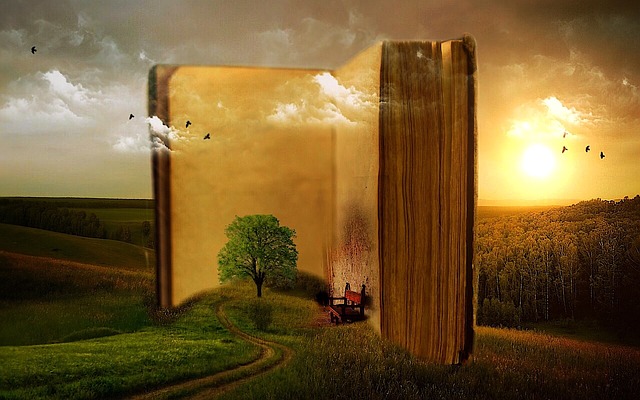
Image by Mystic Art Design from Pixabay

The stories we fashion about ourselves are heavily influenced by our short life spans during an age of unprecedented complexity. We humans, it would seem, are unfathomably complicated creatures who defy simple “just-so” characterizations. Animals, or humans tens of thousands of years ago are fair game for simple stories, but not so for transcendent modern humans.

Two major problems I have with this attitude are that 1) we are animals, and 2) we have exactly the same hardware (albeit with slightly smaller brains) as we had 100,000 years ago.

So allow me to pull back from our present age of baffling complexity to outline a simple story covering the broad sweep of the human saga. The result may be a little startling, and, for a number of readers, sure to be rejected by cultural antibodies as “not applicable” (see also my views of our civilization as a cult).

Continue reading

Views: 18317

The Ride of Our Lives

Courtesy Pixabay/fraugun

How much time do we spend fretting over the course we take as a human species? Granted, perhaps too few are focused on ultimate success, which I define as long-term sustainable living as a subordinate partner to all of life on Planet Earth. Even for those who do concern themselves with the intermediate and far future, attention tends to focus on what adjustments we can make to steer a safer course. Yet, when have we ever truly steered our path as a species? Are we actually in control at all? I’ll argue that we’ve never really been in the driver’s seat on the decisions that have mattered most. Our path has been more like an amusement park ride equipped with an ornamental steering wheel, giving the adorable tykes an intoxicating but illusory sense of control.

The central idea is that any development conferring a short-term competitive advantage will come to dominate the landscape, so that failure to adopt it means losing the race and dropping out of the future. It’s a meta-evolution selecting for something other than our best interests. And it’s winning, as it must.

Continue reading

Views: 16504

Human Exceptionalism

From Pixabay/Activedia

For almost two decades now, I have been on a journey to understand what comes next in the grand human enterprise. I started out in a mindset superficially similar to that of most people I encounter—assuming that we would innovate our way into a future that became ever better: less poverty and hunger; greater conveniences; a probable space future—fingers crossed.

But the more I dug into the details, the more concerned I became that such a grand vision is an illusion built on top of a highly anomalous period in human history when we over-exploited finite resources on Earth in a one-time bonanza—using those resources to access remaining resources ever faster in an accelerating cycle. I constantly sought reassurance as to what I had wrong about this picture, but found little solace. Those who tried to ease my mind spoke in vague praise of human capabilities and pointed to the arc of history as a reliable pattern by which to understand the future. I did not get the impression that they had confronted my specific concerns and had a blueprint for how to navigate past the pile-up of global-scale problems and irreversible consumption of our inheritance.

Lately, as I meet other academics (via PLAN) who have come to similar conclusions (sober, deep, and careful thinkers, I find), a frequent question that arises is: how can something that seems so obvious to us be dismissed by so many others? What are we missing? Or what are they missing? Why is it so hard to reach common ground? Where is the disconnect?

An answer—or at least a partial one—is beginning to resolve itself in my head. Previously, I tended to focus on growth and ecological overshoot as the most important “upstream” factors impacting our complex civilization on our road to an uncertain future, while issues like climate change and political/social considerations are downstream effects (symptoms) that will not get solved without first addressing root causes (the underlying disease). But maybe I have stumbled onto something even more foundational—the headwaters (pathogen), if you will—and am starting to pinpoint why our peril is so hard to grasp.

Continue reading

Views: 21836

Why Worry About Collapse?

Nothing lasts forever.

The first thing I should say is that the word collapse freaks me out. I don’t use it often, for fear of sounding like an unhinged alarmist. Surely, respectable scientists should want nothing to do with it.

The second thing is that I don’t harbor any secret pleasure in imagining catastrophic failure of the human endeavor. It depresses me, frightens me, angers me, frustrates me, confuses me, and makes my wife crabby.

What keeps pulling me back to it—despite my innate repulsion—is not only credible elements of risk that I will get to in this post, but also that I think it’s too important to tolerate our natural tendency to hide from the prospect. Ironically, doing so only raises the odds of that ill fate: mitigation requires direct acknowledgment. Failure to speak openly and honestly about the less-than-remote possibility of collapse is not in our best interest, ultimately.

So let’s grit our teeth and confront the collapse monster. What conditions make it at once likely and off most people’s radars?

It is a heavy lift for one blog post to do a complete job in motivating collapse as a realistic outcome of the human enterprise. Any one argument can be picked at, but the totality should be considered. This is a long post, so buckle up.

Continue reading

Views: 50092

Life Found on Mars

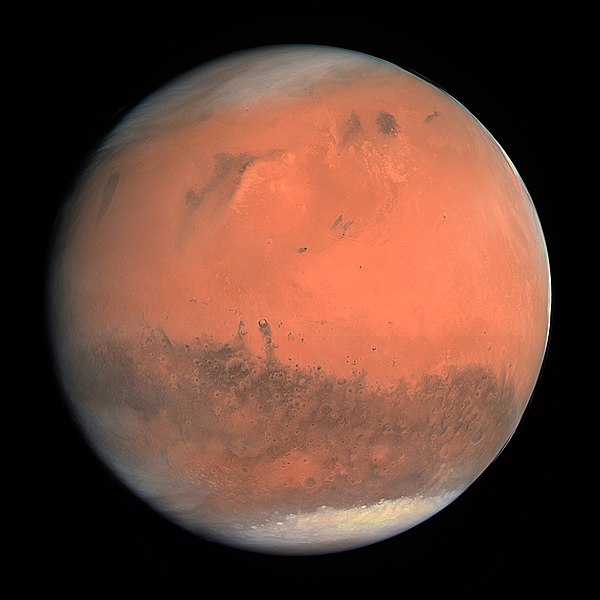
ESA & MPS for OSIRIS Team MPS/UPD/LAM/IAA/RSSD/INTA/UPM/DASP/IDA

No, life has not yet been found on Mars, but imagine waking up to that headline. How would you react? The headline’s font would be huge on print newspapers—maybe one word per page, occupying the first four pages. Some bold papers might even put one letter per page and go so far as to have blank pages for the spaces. The point is, it would be big news.

So I ask again, what would this stir for you?

For me, the swirl would be thick with competing thoughts and feelings, tripping over themselves to get out. First would be the raft of questions stemming from pure curiosity. Is it DNA-based? Is it a separate start, or do we share some ancient microbial ancestor—possibly shuttled from one body to the other following a meteoric impact? What lessons can we learn about how life forms? Can we get the discovered lifeforms to call us Mama or Dada? Will they make good pets?

One can imagine the discovery team, whether at NASA or elsewhere, ecstatic with joy. The entire exploration establishment around the planet would likely be giddy. SETI folks would probably be unable to chew for a while, wearing fixed grins.

I would share many of these same reactions, for the pure joy of discovery and the novel opportunity to re-examine what it means to be a part of life on Earth. But then it dawns on me just how devastating the news might actually be for the human race.

Continue reading

Views: 8730

In Breach of Contract

Image by Edar from Pixabay

Evolution is like a lengthy job application process. Each new species endures a long and harsh vetting procedure to judge what role it plays in the ecosystem, how prepared it is to deal with lean years, predators, disease, climate variations, and anything that might reasonably be expected to arise even once in a thousand generations. Those species not able to satisfy the impartial judges of nature are voted off the island. It’s a tough crowd.

The successful species—the ones that have held on for many thousands of generations—essentially have signed a contract with nature. The contract is implicitly a “common law” arrangement: if you’ve stayed with us this long, you’re (indifferently) accepted as part of the family.

The terms of the contract are also implicit: as long as you continue to operate within the parameters by which you were judged to be adequate members of the ecosystem, you enjoy the built-in protection of that same ecosystem to continue survival, having carved out a role integrated into the rest by a complex web of interdependencies.

Humans signed our contract with evolution based on a primitive lifestyle that persisted for hundreds of thousands of years. We also inherited clauses from ancestor species, whose capabilities we incrementally altered, thus extending the vetting span to millions of years.

Humans today stand in gross violation of our pact with nature. We are egregiously in breach of contract. Our protections are thereby revoked.

Continue reading

Views: 8240