
On A Lark

Prose for Neanderthals (Wikimedia Commons)

A few times now I have played a game with friends in which you try to get your team to guess a word on a card by way of hints/words you come up with. What makes it hard is that you may not use long words that need more than one “sound” to speak (yes, there is a word for that, but if I used it here, I would break the rules). If you slip up and use a “big” word, you get bopped on the head with a club (a soft one that is blown up with air from your lungs).

What I found was that my style is not the same as that of my friends. They tend to speak one word at a time, each one picked as a key hint that might—on its own—help close in on the word to be guessed. An example might be that hints for the word “soup” would be words like “hot,” “slurp,” “bowl,” “cup,” “broth.” It gets the job done.

But I tend to speak whole thoughts as a string of words that have nouns and verbs and all the bits that join them—the way we tend to speak in real life. And for the most part, I seem to keep up a pace close to what I can do in day-to-day speech—if not just as fast. In the “soup” case, I might say “It’s a type of food made with broth that you eat or slurp from a bowl or cup: best on a cold day or when you’re sick.” I can tell you that it works well. My friends are so quick to guess the right word when I use this scheme that I don’t make it to the end. It turns out that our brains are well-tuned to this style of speech.

On a lark, I thought I would try to write based on these rules, to see where it might go. So far, so good—sort-of. A few times I have had to go off on a strange path to make my point, when a key thought seems to have no short word that can do the job. But as I wrote more, things took a turn that I had not guessed would come to pass when I set out. The lark took the shape of a post!

Words do not make the world. They can’t catch all that is real. Words can’t give a full sense of how red does not look like blue, or what light is, or how quarks move, or why some things are charged or what charge is, in fact. Words are not up to the task. The world has been here for far more time than words have, so does not and can not work based on them. Words can give no more than a poor, pale sense of the truth of things.

What I want to do in this post, just for fun (well, more than that), is use the rules of this game to show how hard it is to make a strong and clear case for a point that would still be tough to make if I could use all words. I think/hope we can learn from it. When bound to a small set of words, all kinds of wrong views can be spawned in the cracks that are left. But this is true as well when the full set of words can be used, which is—let’s face it—still a small set in the grand scheme of things. In each case, words have no choice but to fall short of the full deal.

Continue reading

Views: 332

The Worst Inventions

A joke for Alex Leff; these don’t explicitly make the list (image from Wikimedia Commons).

Listening to a podcast conversation between Derrick Jensen and James Van Lanen (anthropologist), I was intrigued by their discussion of the “five worst” inventions. This would get anyone’s gears turning. But I was particularly energized because in the day or two before, I had considered for the first time the terrible power of one invention that I had previously never questioned as being anything but fantastic. I employ it constantly…right now, in fact.

I was excited enough to contact Derrick about this “dark horse” candidate to get his reaction, and he, too, was energized enough to suggest our own conversation on the matter, which has since been recorded and is available on Resistance Radio.

In this post paralleling the podcast conversation, I define what makes an invention bad in my view, preface with a trigger warning about inevitable attachments and fondness, and offer a few provisional “worst” inventions before getting to five that are less ambiguous in my book.

Continue reading

Views: 6399

The Writing on the Wall

Image by Greg Montani from Pixabay.

Almost as if done deliberately to demonstrate mental incapacity, I recently found myself making a connection that was staring me in the face for years but that I never recognized. Surely, scads more sit waiting in plain view, yet will never be smoked by me as long as I live.

In this case, several overt clues tried waving it in my face, but I remained oblivious. I feel like my former best-buddy cat who was always mesmerized by water, never tiring of watching it slosh, splash, and splatter. My wife and I once took the cat(s) on a reluctant car trip passing along the coast of northern California. The road came right up on the beach, and I stopped with the idea that I would show the ocean to him, which would surely captivate his attention and blow his mind. We were so close that the ocean and waves dumping on the beach were almost all that could be seen out the window. I held him up to take in the sight, but in his squirming state—questioning what new cruelty I was subjecting him to on top of this already-heinous and interminable car ride—he somehow managed to completely fail in ever noticing the ocean. But it was right there in front of him! You can lead a cat to water…

Oh—I should get to the point? A couple weeks back, the post on Spare Capacity mentioned the outsized detrimental impact written language has had. I know. Here I am still using it. But like my cat, I failed to notice what kept filling my field of vision.

Continue reading

Views: 3948

Spare Capacity

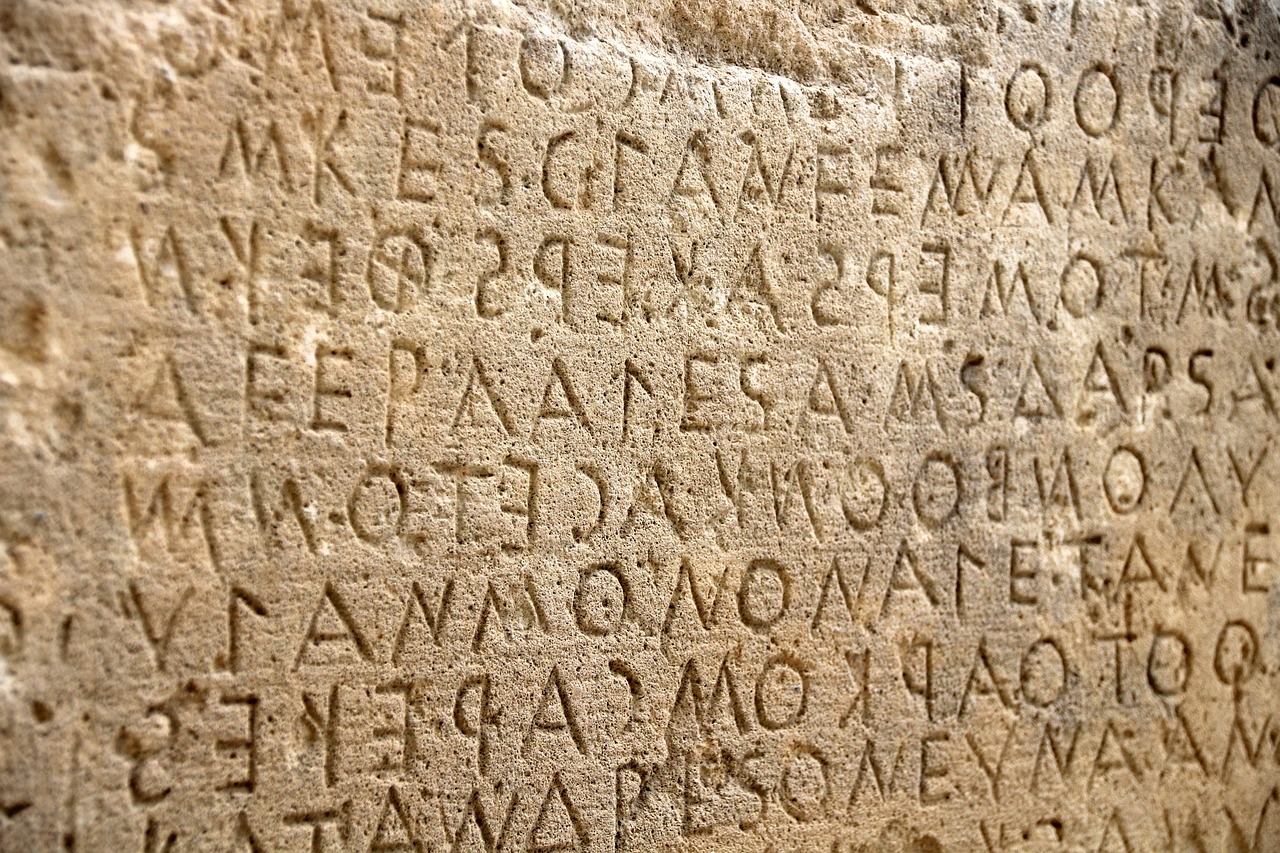
By BabelStone, from Wikimedia Commons.

Our prized cerebral capabilities at the level of awareness don’t stack up to very much when compared to the vastly-more-numerous-and-amazing capabilities of almost every other aspect of Life. The relatively meager mental capacity we tend to worship is in many ways the slightest addendum whose capabilities are comparatively rather modest. Yes, we have devised ways to lock in small gains and ratchet them into powerful forces, but the process is embarrassingly slow and limited compared to most processes carried out by Life.

The Impressive Base

The overwhelming share of what makes humans amazing operates far beyond mental awareness. Outside the sacred cerebrum, we breathe, circulate blood, digest a diverse menu of food, filter and clean internal fluids, eliminate wastes, heal wounds, coordinate movement, generate the cells for reproduction, build and rebuild ourselves from a cryptic blueprint, and perhaps most impressively solve very thorny open-ended problems of devising antibodies tailored to disable novel pathogens. For all their “massive” brain-power, the average living human would not have the first clue how to devise a functioning, fully-integrated replacement for any of these and thousands more tasks our bodies handle without a thought. Even the best teams in the world wouldn’t be able to pull it off (though would at least have “the first clue,” and in so doing would know it to be beyond their capability).

Now add the cerebrum and a whole suite of additional capabilities emerge—still beyond our awareness. Perhaps most stunning is visual processing. Among other attributes, it’s nearly instantaneous, seamlessly combines vision from two optical instruments, fills in gaps, enjoys excellent color representation, and has extraordinary dynamic range (putting our film/print or electronic cameras/displays to shame; it’s why total solar eclipses can neither be captured nor displayed adequately by technology). Add to this an incredible capacity for auditory processing able to differentiate subtle sounds and comprehend language. What’s easy for a two-year-old still stumps technological implementations. Our brains perform pattern recognition tasks that are light years ahead of what lots of investment and smart people have been able to cobble in crude technological form. Remember the self-driving car hype from about a decade ago? And the fact that captchas work at all is remarkable testimony.

Don’t ask us how we do it—we have no idea. We just know so many things that we can’t articulate or are not even aware of: we take them for granted—as must be the case when literally unaware of the underlying processes.

Unbidden, the Disney Jungle Book tune for “Bare Necessities” slid into my brain in connection to the “spare capacity” title and theme of this post. Maybe I should try a song version sometime…

Continue reading

Views: 3664