Space as a Window

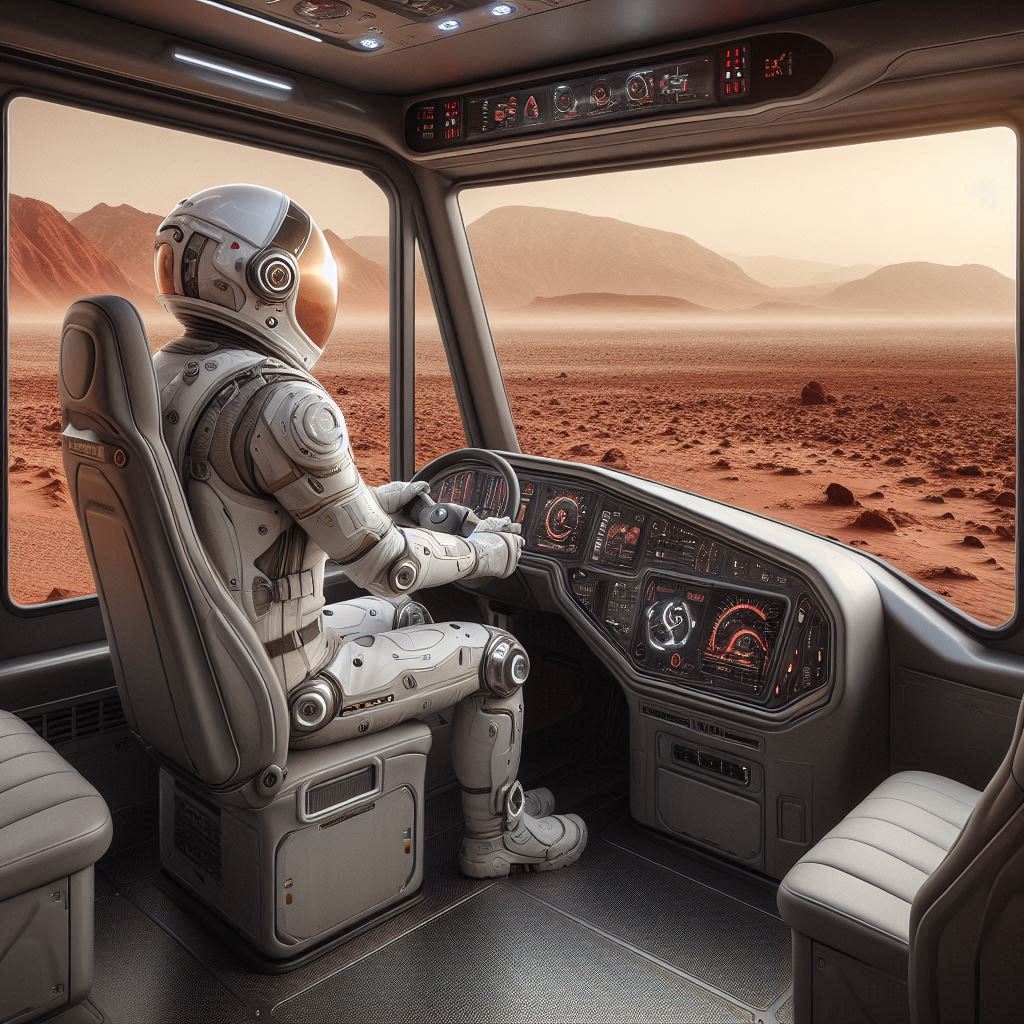
A reflected window on space camp (Wikimedia Commons).

I grew up as a space enthusiast before I grew up. Part of the maturation process involved work on a Space Shuttle project, two decades of uninterrupted funding from NASA, reviewing many dozens of NASA proposals for space/rocket investigations, and serving as Principal Investigator for a mission concept study centered at the Jet Propulsion Laboratory to put a laser transponder on Phobos. Oh, and the most significant chunk of my astrophysics career relied upon the reflectors placed on the lunar regolith by astronaut hands.

No single moment stands out as a crossing of the Rubicon in terms of my migration away from fantasy. But by October 2011 my faith had eroded sufficiently to put out a blog post titled Why Not Space—motivated by responses to the “growth can’t last on a finite planet” drive that initiated this blog. “We’ll just expand into space,” some countered. Note: always beware the word “just,” especially when attached to feats of unprecedented difficulty.

I reprised the theme in Chapter 4 of my textbook (out in 2021), and again a few weeks back. In the last five years, my journey has produced significantly new perspectives (for me) which only serve to make the space delusion more strikingly fascinating and revealing. At this point, it’s hard to identify a phenomenon that so completely captures the religion of the day and its unhinged basis.

Continue reading

Views: 4724

Biosphere Theatrics

Photograph by John de Dios (Wikimedia Commons)

I recently watched a documentary from 2020 called Spaceship Earth about the Biosphere 2 project in Oracle, Arizona. I had picked up bits and pieces about Biosphere 2 over the years, but found the film to be effective in expanding my sense of the endeavor.

Biosphere 2 was an effort motivated by obvious ecological peril together with the crazed space-age notion that we’d be living on other solar system bodies in a few generations. So, we’d better get our butts in gear and learn how to create our own sealed ecosystems. To clear up a point of confusion, Biosphere 2 was not the second attempt at an artificial environment, but was so-named to honor Earth as the original biosphere.

Here, I offer a few reflections spurred by the documentary.

Continue reading

Views: 3318

Animistic Physics

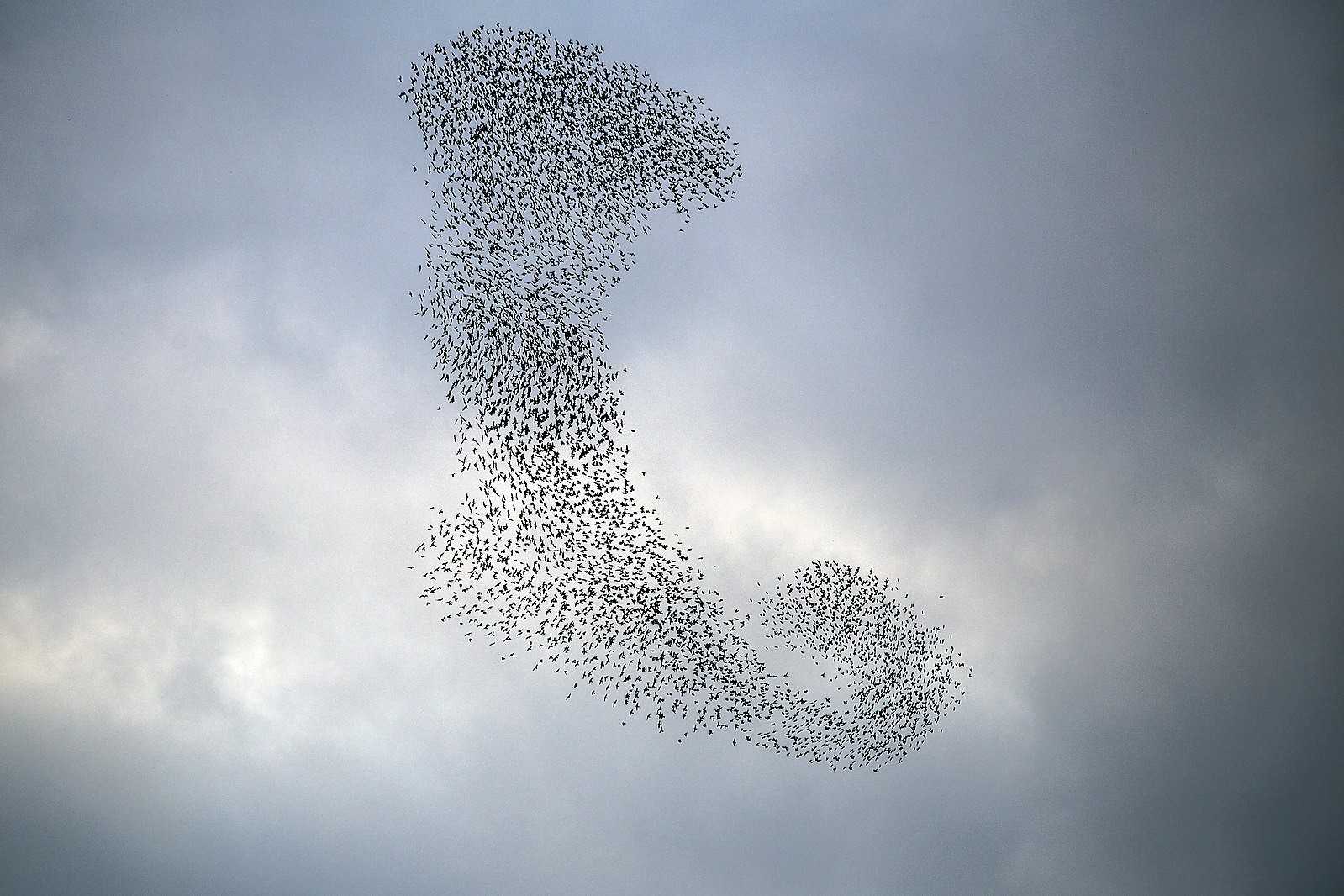
Murmuration by Mostafameraji (Wikinedia Commons).

It might seem that animistic beliefs—which prevailed prior to agriculture—would be about as far away from modern physics as possible. Yet, I find them to be rather compatible in a number of foundational ways. Allow me to elaborate. And don’t worry: it’s not about quantum mumbo-jumbo.

What is animism? While not a formal belief system, animists tend to view nearly everything in the world as being animated by spirits or forces beyond our capacity to fully comprehend. We can call these animating agents spirits or “the gods.” Animists live in the hands of the gods along with all other Life: not particularly special. These spirits not only move animals and plants, but also weather, landscapes, oceans, rivers, mountains, rocks, and soil.

Modern languages (reflecting a non-animistic worldview) objectify the world by being noun-dominated—which deeply affects how we think about the world. Animist languages, by contrast, are often verb-dominated (verbal people!), so that verbs are used to connote mountains, rivers, bays, trees, etc.—reflecting the sense that such beings are always in a state of motion and change. What we call a sand bar is “verbalized” as “to be a sand bar”—it is acting as a living, changing, life-interacting entity, or being. Note that the noun “being” itself carries an echo of animism, embodying this state of verbiness, as a variant of “be.” It’s a nounified verb.

An important tip-off as to how animism relates to physics is provided by Daniel Quinn in The Story of B, on page 136.

Animism looks for truth in the universe, not in books, revelations, and authorities. Science is the same. Though animism and science read the universe in different ways, both have complete confidence in its truthfulness.

Below, I outline five (connected) ways that animism meshes well with physics, mirroring a conversation I had with Derrick Jensen that you can listen to here. While very few scientists would volunteer that they have animistic leanings, these connections might make it easier to identify as such.

As an aside, I “privilege” physics here not only because that’s my own background, but because all other sciences appear to rest on (abide by) a physics foundation, often characterized by complexity that eludes first-principles formulations in the style of physics. One might say that chemistry is applied physics, biology is applied chemistry, etc. The word “science” may easily be substituted for “physics” in what follows.

Continue reading

Views: 4547

The Genius of Survival

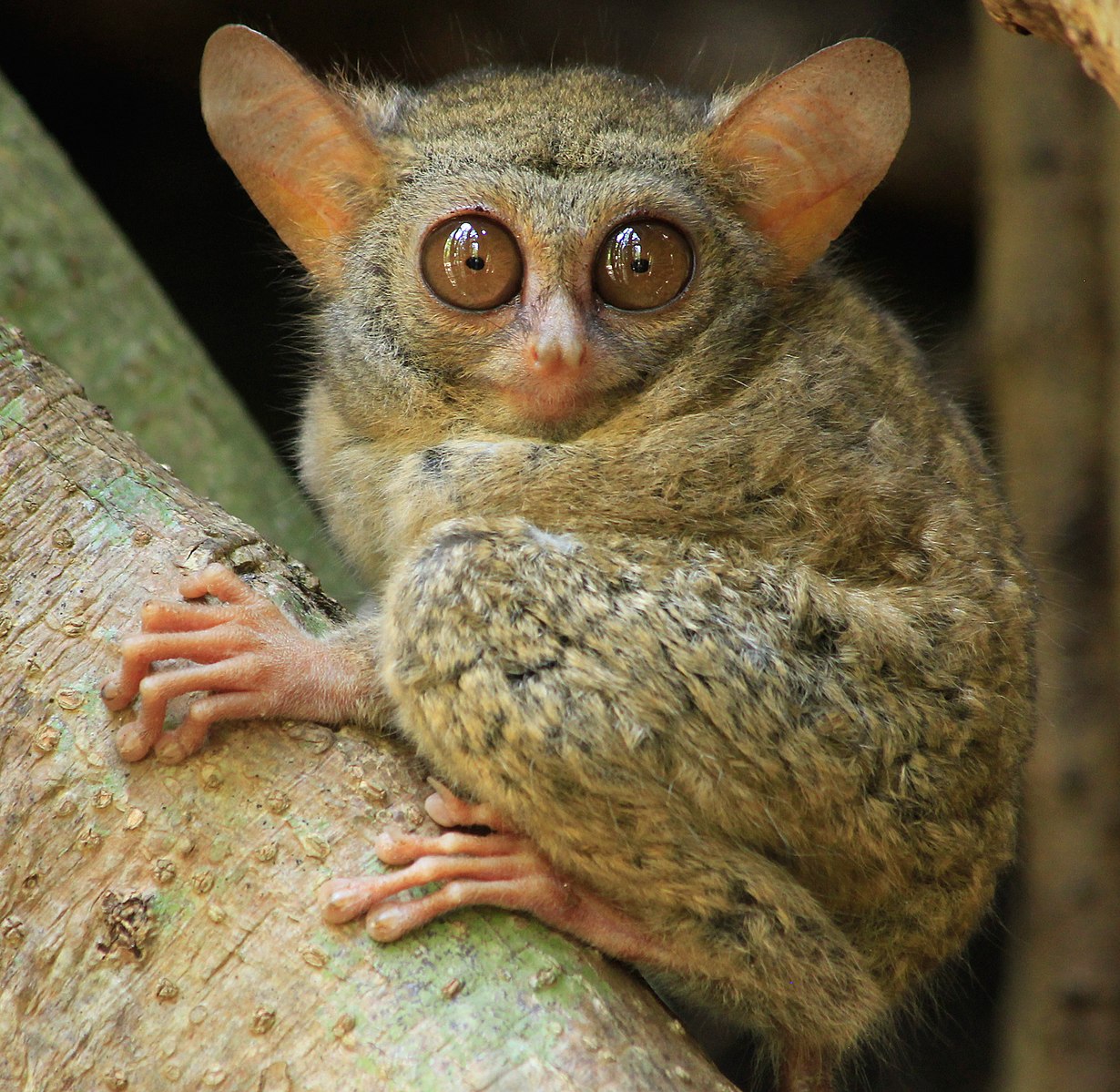
Photo by Meldy Tameng (Wikimedia Commons).

By accident, my wife and I stumbled onto the convention of calling essentially every living being a genius. It started as a joke about our cat, because obviously—in our human-supremacist culture—superlative traits like genius can only be applied to humans! Soon enough, this practice migrated to squirrels, newts, baby birds, ants—and even plants, fungi, and microbes. I no longer think of it as a joke.

I’ve utilized this framing in other posts by noting that every one of these beings knows how to do things we haven’t the foggiest clue how to do ourselves—or how, in detail, they manage it. I’ll get to the nuanced nature of the word “know” in a bit. But for now we can at least admit that the world is overflowing with phenomena we haven’t even registered, let alone understood. Typically, we just scratch the surface at best.

What I’ll do here is explore the relative genius of Life as compared to the normal use of the term, in the way of cognitive prowess. Let the games begin!

Continue reading

Views: 3556

What is Life?

By Conselleria de Medi Ambient, from Wikimedia Commons.

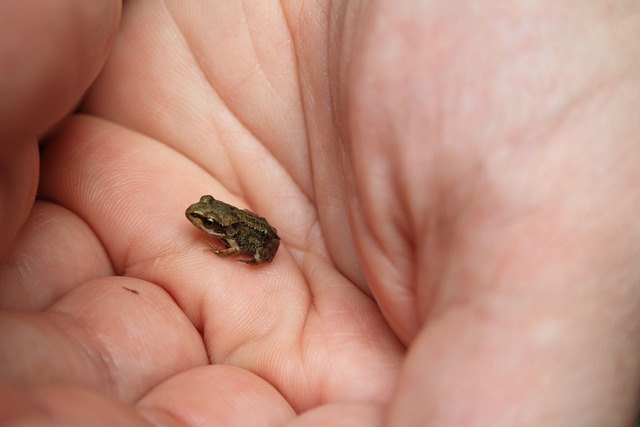
No doubt about it: Life is truly amazing. I mean, the things it gets up to far exceed our imaginations! (Just watch a few dozen Ze Frank “True Facts” videos to scratch the surface.) It hardly seems necessary to invest in a post to elucidate what constitutes Life, when a small child will correctly identify instances almost every time. Living beings demonstrate awareness about their surroundings, taking actions broadly in service of goals to thrive and reproduce. An amoeba marks itself as alive because we witness its purposeful mobility to secure food and evade danger.

Yet, living beings are undeniably made of atoms—atoms that do not appear in any close investigation to operate outside the usual rules of physics. Our sensation of awareness, experience of color perception, etc. seems so far removed from physics that the intractable connection is obvious to neither child nor adult. How could this awareness (what we label “consciousness”) possibly arise out of inanimate particles obeying physics without some “special sauce” unavailable to mere “machines” like computers or robots? It seems prima facie absurd, so it requires an unusual suspension of disbelief to submit to the baffling prospect.

How is it even possible, though, that inanimate matter can constitute Life? In a word: feedback. Life is feedback. The sun is of huge importance to Life, but we would not say that it is alive itself even though it actively engages with the universe and is a critical contributor to living beings on Earth. It’s continuance as a star is not contingent on these interactions. No feedback loop makes fusion in the core care what happens in Las Vegas. As an aside, I resist dividing lines and include the Sun (and everything else) in a living whole: just try doing without it!

Continue reading

Views: 3503

Egregious Inequality

Image by Doris Rohmann from Pixabay

We’ve all heard the outrageously skewed statistics. The top 1%, or 0.1%, or even 0.01% of humans control an outsized fraction of total wealth (something like 30%, 15%, and over 5%, respectively). Because our culture values the fictional construct of money far more than is warranted, and the ultra-rich have a hell of a lot of it, they acquire status and access to power unavailable to almost everyone else. How can such a small fraction of the population possess such a disproportionate share of this resource—one that we’ve decided bestows influence and power? It doesn’t seem at all fair.

But, money isn’t the only disproportionate power-conferring asset on this planet. What else does our culture value above almost all else? Brains. What—are we zombies?! Large brains are what (we tell ourselves) set us apart from mere animals—taken to justify a sense superiority. Earth belongs to us. We can do whatever we want, because we’re the ones with the big brains: the self-declared winner of evolution—as if it’s even possible to have a winner in an interdependent community. Through innovation and technology development, we now wield god-like power over the rest of life on Earth—for a short time, anyway, until it becomes obvious that “winning” translates to “everybody loses.”

Given our similar tendencies to overvalue money and brains, I was motivated to compare inequality in brain mass within the community of life to the gross inequality we abhor in financial terms. Is it as bad? Worse? Humans constitute 2.5% of animal biomass, and 0.01% of all biomass on the planet. We are also one of perhaps 10 million species, which in those terms means we represent only 0.00001% of biodiversity. Any way you slice it, we are a small sliver of Life on Earth—while managing to dominate virtually every ecological domain. As our culture tells it, humans are the deserving elites.

What fraction of the planet’s brain wealth do we possess? To be clear, in performing this analysis, I am not making the case that brains are what matters—far from it. But in our culture, our brains are cherished and essentially worshiped for their unique capacity in terms of ingenuity, allowing us to defy the limits that all other species “suffer.” What is our disproportionate share of brain mass? Is it as bad as 15% or 30%, like our egregiously-lopsided wealth inequality?

Continue reading

Views: 3614

MM #17: Being Human

This is the seventeenth of 18 installments in the Metastatic Modernity video series (see launch announcement), putting the meta-crisis in perspective as a cancerous disease afflicting humanity and the greater community of life on Earth. Here, I attempt to paint a picture of how we might think of ourselves as humans on this planet, as integral members of the community of life. If we’re good, evolution might keep us for a while—along with lots of friends currently in deep trouble.

As is the custom for the series, I provide a stand-alone companion piece in written form (not a transcript) so that the key ideas may be absorbed by a different channel. The write-up that follows is arranged according to “chapters” in the video, navigable via links in the YouTube description field.

Continue reading

Views: 2827

MM #13: A Species out of Context

This is the thirteenth of 18 installments in the Metastatic Modernity video series (see launch announcement), putting the meta-crisis in perspective as a cancerous disease afflicting humanity and the greater community of life on Earth. This episode unpacks the great Wes Jackson aphorism that modern humans are a species out of context. Well, what’s the right context, and how are we out of it?

As is the custom for the series, I provide a stand-alone companion piece in written form (not a transcript) so that the key ideas may be absorbed by a different channel. The write-up that follows is arranged according to “chapters” in the video, navigable via links in the YouTube description field.

Continue reading

Views: 2992

MM #7: Ecological Nosedive

This is the seventh of 18 installments in the Metastatic Modernity video series (see launch announcement), putting the meta-crisis in perspective as a cancerous disease afflicting humanity and the greater community of life on Earth. This episode will try (and probably fail) to convey the degree to which Earth’s biodiversity and ecological health are in peril.

As is the custom for the series, I provide a stand-alone companion piece in written form (not a transcript) so that the key ideas may be absorbed by a different channel. The write-up that follows is arranged according to “chapters” in the video, navigable via links in the YouTube description field.

Continue reading

Views: 4587

MM #6: Accidental Tourists

This is the sixth of 18 installments in the Metastatic Modernity video series (see launch announcement), putting the meta-crisis in perspective as a cancerous disease afflicting humanity and the greater community of life on Earth. This episode makes the point that humans were not inevitable as a culmination of evolution. We are not the purpose or goal of the Earth or universe.

As is the custom for the series, I provide a stand-alone companion piece in written form (not a transcript) so that the key ideas may be absorbed by a different channel. The write-up that follows is arranged according to “chapters” in the video, navigable via links in the YouTube description field.

Continue reading

Views: 2037