Egregious Inequality

Image by Doris Rohmann from Pixabay

We’ve all heard the outrageously skewed statistics. The top 1%, or 0.1%, or even 0.01% of humans control an outsized fraction of total wealth (something like 30%, 15%, and over 5%, respectively). Because our culture values the fictional construct of money far more than is warranted, and the ultra-rich have a hell of a lot of it, they acquire status and access to power unavailable to almost everyone else. How can such a small fraction of the population possess such a disproportionate share of this resource—one that we’ve decided bestows influence and power? It doesn’t seem at all fair.

But, money isn’t the only disproportionate power-conferring asset on this planet. What else does our culture value above almost all else? Brains. What—are we zombies?! Large brains are what (we tell ourselves) set us apart from mere animals—taken to justify a sense superiority. Earth belongs to us. We can do whatever we want, because we’re the ones with the big brains: the self-declared winner of evolution—as if it’s even possible to have a winner in an interdependent community. Through innovation and technology development, we now wield god-like power over the rest of life on Earth—for a short time, anyway, until it becomes obvious that “winning” translates to “everybody loses.”

Given our similar tendencies to overvalue money and brains, I was motivated to compare inequality in brain mass within the community of life to the gross inequality we abhor in financial terms. Is it as bad? Worse? Humans constitute 2.5% of animal biomass, and 0.01% of all biomass on the planet. We are also one of perhaps 10 million species, which in those terms means we represent only 0.00001% of biodiversity. Any way you slice it, we are a small sliver of Life on Earth—while managing to dominate virtually every ecological domain. As our culture tells it, humans are the deserving elites.

What fraction of the planet’s brain wealth do we possess? To be clear, in performing this analysis, I am not making the case that brains are what matters—far from it. But in our culture, our brains are cherished and essentially worshiped for their unique capacity in terms of ingenuity, allowing us to defy the limits that all other species “suffer.” What is our disproportionate share of brain mass? Is it as bad as 15% or 30%, like our egregiously-lopsided wealth inequality?

Continue reading

Views: 3818

MM #17: Being Human

This is the seventeenth of 18 installments in the Metastatic Modernity video series (see launch announcement), putting the meta-crisis in perspective as a cancerous disease afflicting humanity and the greater community of life on Earth. Here, I attempt to paint a picture of how we might think of ourselves as humans on this planet, as integral members of the community of life. If we’re good, evolution might keep us for a while—along with lots of friends currently in deep trouble.

As is the custom for the series, I provide a stand-alone companion piece in written form (not a transcript) so that the key ideas may be absorbed by a different channel. The write-up that follows is arranged according to “chapters” in the video, navigable via links in the YouTube description field.

Continue reading

Views: 2958

MM #13: A Species out of Context

This is the thirteenth of 18 installments in the Metastatic Modernity video series (see launch announcement), putting the meta-crisis in perspective as a cancerous disease afflicting humanity and the greater community of life on Earth. This episode unpacks the great Wes Jackson aphorism that modern humans are a species out of context. Well, what’s the right context, and how are we out of it?

As is the custom for the series, I provide a stand-alone companion piece in written form (not a transcript) so that the key ideas may be absorbed by a different channel. The write-up that follows is arranged according to “chapters” in the video, navigable via links in the YouTube description field.

Continue reading

Views: 3241

MM #7: Ecological Nosedive

This is the seventh of 18 installments in the Metastatic Modernity video series (see launch announcement), putting the meta-crisis in perspective as a cancerous disease afflicting humanity and the greater community of life on Earth. This episode will try (and probably fail) to convey the degree to which Earth’s biodiversity and ecological health are in peril.

As is the custom for the series, I provide a stand-alone companion piece in written form (not a transcript) so that the key ideas may be absorbed by a different channel. The write-up that follows is arranged according to “chapters” in the video, navigable via links in the YouTube description field.

Continue reading

Views: 4824

MM #6: Accidental Tourists

This is the sixth of 18 installments in the Metastatic Modernity video series (see launch announcement), putting the meta-crisis in perspective as a cancerous disease afflicting humanity and the greater community of life on Earth. This episode makes the point that humans were not inevitable as a culmination of evolution. We are not the purpose or goal of the Earth or universe.

As is the custom for the series, I provide a stand-alone companion piece in written form (not a transcript) so that the key ideas may be absorbed by a different channel. The write-up that follows is arranged according to “chapters” in the video, navigable via links in the YouTube description field.

Continue reading

Views: 2181

MM #5: Our Biological Inheritance

This is the fifth of 18 installments in the Metastatic Modernity video series (see launch announcement), putting the meta-crisis in perspective as a cancerous disease afflicting humanity and the greater community of life on Earth. This episode extends the point from Episode 3 that we owe almost everything to life that came before us. All our senses and capabilities are inherited. We would be nothing without our older brothers and sisters on this planet.

As is the custom for the series, I provide a stand-alone companion piece in written form (not a transcript) so that the key ideas may be absorbed by a different channel. The write-up that follows is arranged according to “chapters” in the video, navigable via links in the YouTube description field.

Continue reading

Views: 2192

MM #4: Evolution

This is the fourth of about 17 in the Metastatic Modernity video series (see launch announcement), putting the meta-crisis in perspective as a cancerous episode afflicting humanity and the greater community of life on Earth. This episode addresses the more subtle and under-appreciated aspects of evolution, which acts on the whole community of life in full ecological context.

As is the custom for the series, I provide a stand-alone companion piece in written form (not a transcript) so that the key ideas may be absorbed by a different channel. The write-up that follows is arranged according to “chapters” in the video, navigable via links in the YouTube description field.

Continue reading

Views: 2347

Inexhaustible Flows?

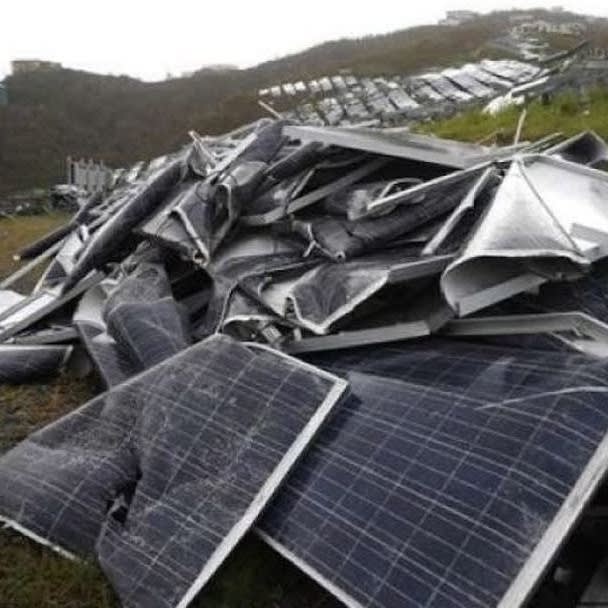
Photo from Monash Universiry

I recently came across a statement to the effect that once we transition away from fossil fuels to renewable energy like solar, wind, and hydro, we would essentially be home free for the long run—tapping into inexhaustible flows. It is a very pleasant notion, to be sure, and one that I believe is relatively common among enthusiasts for renewable energy.

Naturally, I am concerned by the question of: what magnificent things would we do with everlasting copious energy? As an excellent guide, we can ask what amazing things have we done with the recent bolus of energy from fossil fuels? Well, in the course of pursuing material affluence, we have eliminated 85% of primeval forest, made new deserts, created numerous oceanic dead zones, drained swamps, lost whole ecosystems, almost squashed the remaining wild land mammals, and initiated a sixth mass extinction with extinction rates perhaps thousands of times higher than their background levels—all without the help of CO2 and climate change (which indeed adds to the list of ills). These trends are still accelerating. Yay for humans, who can now (temporarily) live in greater comfort and numbers than at any time in history!

But the direction I want to take in this post is on the narrower (and ultimately less important) technical side. All the renewable energy technologies rely on non-renewable materials. Therefore, inexhaustible flows are beside the point. It’s like saying that fossil fuel energy is not practically limited by available oxygen for combustion, so we can enjoy fossil fuels indefinitely. Or that D–T fusion has billions of years of deuterium available, when there’s no naturally-occurring tritium (thus reliant on limited lithium supply). In a multi-part system, the limiting factor is, well, the limiting factor. Sure, into the far future the sun will shine, the wind will blow, and rain will fall. But capturing those flows to make electricity will require physical stuff: all the more material for such diffuse flows. If that stuff is not itself of renewable origin, then oops. The best guarantee of renewability is being part of natural regeneration (i.e., of biological origin). If solar panels, wires, inverters, and batteries were made of wood and the like: alright, then.

Recognizing that biological organisms—plants and the animals that directly or indirectly draw energy from them—have already figured out how to tap into (essentially) inexhaustible flows—solar, primarily—I became interested in comparing the performance of the human animal to that of a solar panel or wind turbine, in terms of mineral requirements. After all, the biosphere gets by without mining the depths. So let’s dig into the material requirements of life.

Continue reading

Views: 9837

Sustainable Timescales

Image by günter from Pixabay

The word “sustainable” is overused to the point of becoming almost meaningless in our culture. In principle, though, it’s an easy enough concept. Unsustainable things fail: unable to continue indefinitely. By this logic, sustainable implies the opposite of failure: success.

Note that “sustainable” does not mean some mythical equilibrium, which has never existed for life on this planet. The key condition is that major changes are gradual enough to allow ecological adaptation. When they aren’t, we get mass extinctions—even when it takes tens or hundreds of thousands of years for the precipitating changes to fully develop.

So, step one in assessing sustainability is to ask: what can continue without failing? But the question needs an associated timescale to be meaningful. This post explores timescales on which it makes sense to assess sustainable practices.

Continue reading

Views: 4923

A Religion of Life

Image by Karen .t from Pixabay

The following discussion about belief systems may seem out of place coming from a recovering astrophysicist, and perhaps I am as surprised as you are. But my path has taken me to an unexpected place, so that I now think we would be wise to make a radical course change at the deepest level of what we believe.

Why should we consider a major change?

  • Because we don’t know everything, and never can.
  • Because what we do know tells us we’re on the wrong track, initiating a sixth mass extinction—not just from CO2, but from modernity itself.
  • Because we now (collectively) believe in the wrong things, like human supremacy and economics (gross).
  • These beliefs are actively hurting the living creatures of the planet, including us.

Science has revealed so much about the origins and rules of the universe, and how life came to be so exquisitely diverse. Let’s tap into what this tells us. Let’s also acknowledge that mysteries will always remain. Rather than continue to be paralyzed in this urgent time by what we don’t yet know, let’s fill in the gaps with belief—or even faith—rooted in the science we already do know. Let’s move beyond the current stories we tell ourselves in modernity, and fashion new ones that move us in a better direction—to the enduring benefit of all life on Earth.

I’m not sure I know how to tell this story, so please bear with me and accept my apologies for a long-ish read. For those who saw last week’s post, this one contains familiar echoes, but represents a fresh approach intended for a more general audience.

Continue reading

Views: 7439