Deer in the Headlights

Too late to stop. Must hit deer or car. Pick a lane.

Do the Math readers have surely noticed a new bone I like to gnaw of late: human supremacy. For me, this started in early 2022 with a post that I called at the time Human Exceptionalism. Since then, I recognize that humans are indeed exceptional, as are other species—each in their own ways. In the 20 months since writing the “exceptionalism” post—bolstered by things I’ve read in the interim—my sense has only strengthened that the perception of separateness began in earnest when we started mastering land and beast via agriculture and herding, became far more pronounced during the Enlightenment, and now is the chief engine behind modernity and the meta-crisis. I recommend a magnificent book chapter by Eileen Crist from 2015 (republished at Resilience) that was missing from my life these past 8 years. At this point, I would far sooner try to address the root problem of human supremacy than engage in any talk of technology—which simply becomes a tool to effect human supremacist aims to the ultimate detriment of all..

If we could somehow stamp out human supremacy, I believe that humans would spontaneously organize differently, prioritize the more-than-human world, begin to place more value on the far future, set aside science/technology fetishism to focus on deeper values, and—in short—become wiser. Many of the ills caused by modernity would simply melt away under a new worldview, accompanied by a complete overhaul of how we think, know, and live. Many of the actions of today would seem unthinkable and repulsive under a non-supremacist worldview.

So how might we stamp out human supremacy? One step is to employ tools that help us recognize it in ourselves. Are you a human supremacist? I was. No doubt I still harbor aspects of the scurrilous affliction, embedded as I am within modernity. My apologies (and respect) if you happen to be the rare bird who has escaped the cage, but the safest assumption for now is that you are indeed a human supremacist—whether you recognize it or not—as that’s what our culture produces en masse. If you don’t like the suggestion that you’re a human supremacist, then good! That’s a great starting place, and I could hardly ask for more. Most racists bristle at being called racist, which is adorable in a contemptible sort of way.

This post proposes a crude test for deep-seated human supremacist attitudes. It has echoes of the classic “trolley problem,” and I hate myself for that. But the setup is not as hypothetical or unlikely. Also, rather than the intractable weighing of (sacred) human lives against action/inaction, I think this one has a clearer logical resolution.

The Scenario

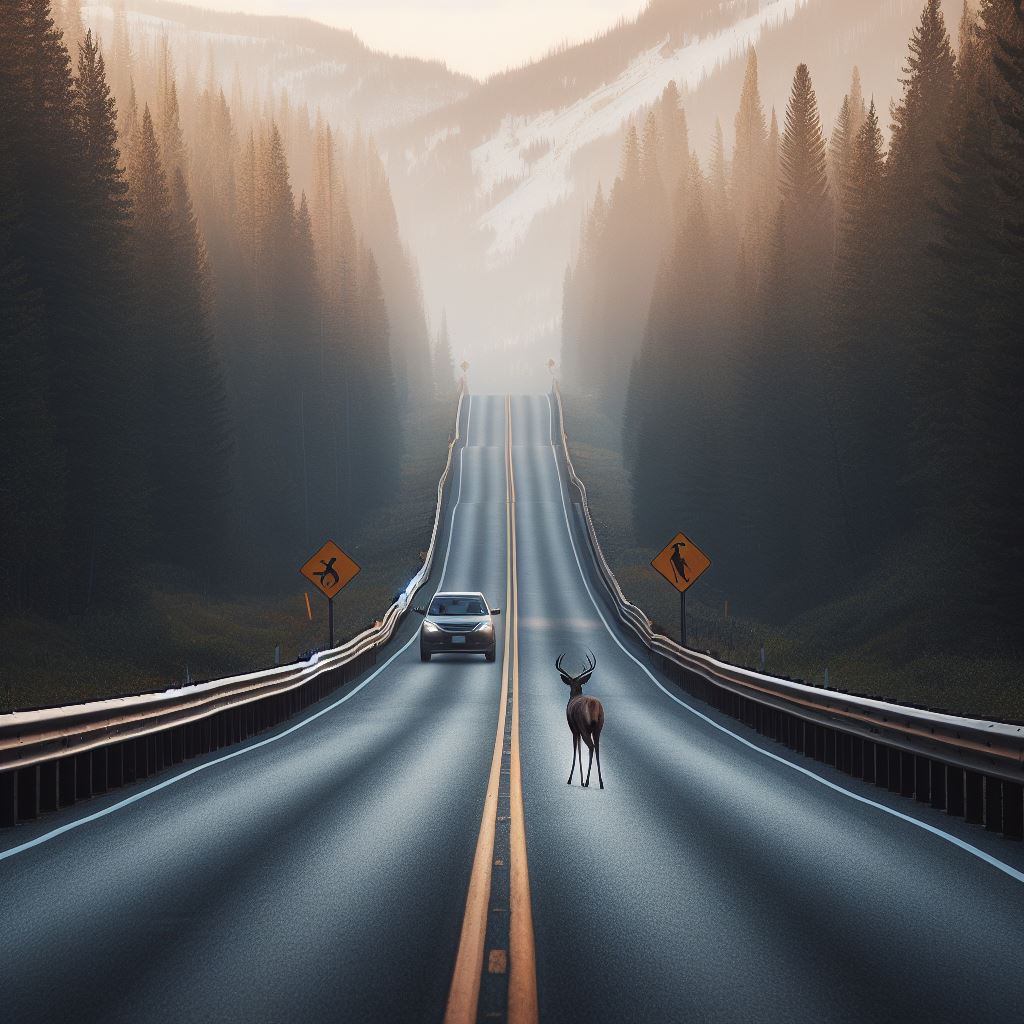
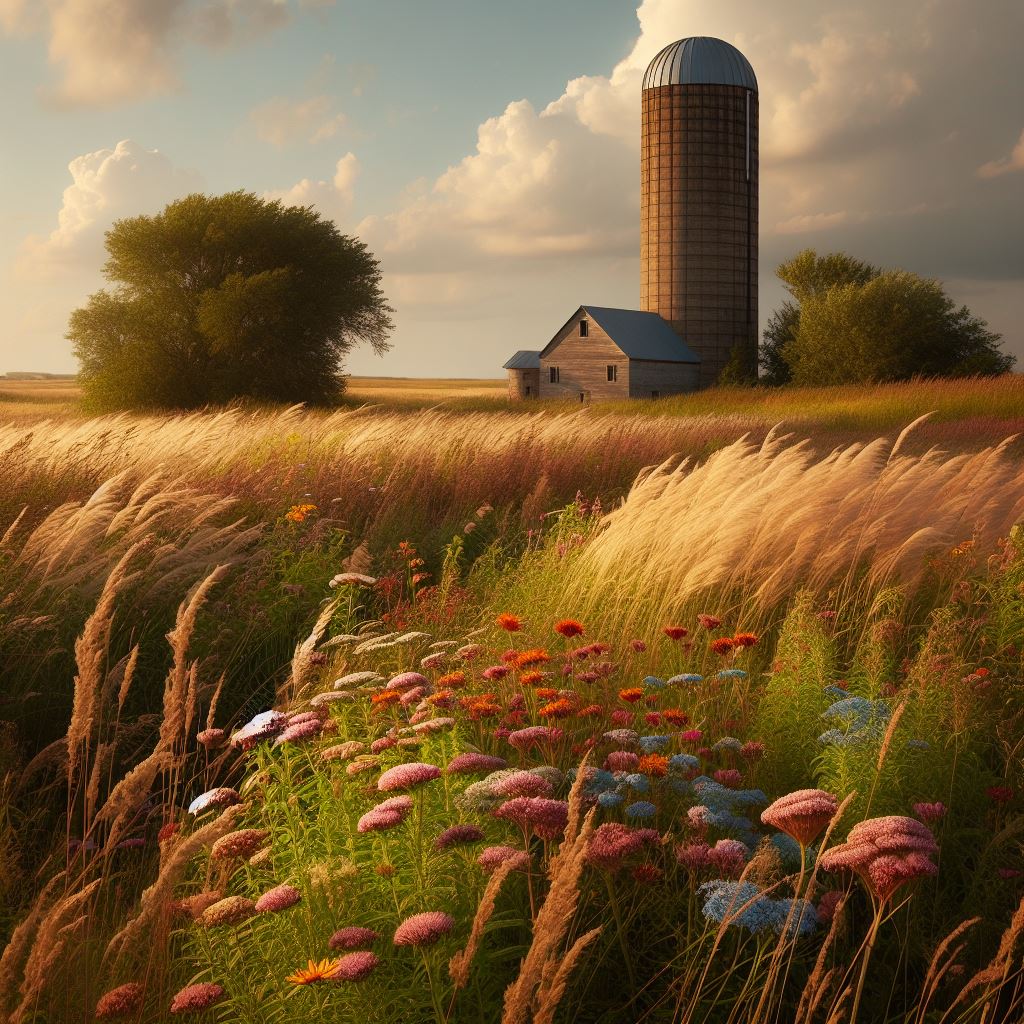
Two cars rapidly approach each other on a two-lane road that for a short span has no shoulders (e.g., guard rails, steep bluffs). Shortly before the cars reach each other, a large deer suddenly pops out into one lane and freezes. It is too late to brake in time to avoid hitting the deer, so the only choice on the part of the unlucky driver is to plow into the massive deer at windshield height or swerve into the oncoming car for a destructive head-on collision and near-certain death of those in both cars. In order to bypass the effect of self-preservation, let us stipulate that the driver in the lane with the deer will die either way, and knows this. Which choice makes sense? Is it obvious to you?

Continue reading

Views: 3238

Are WE Lucky?

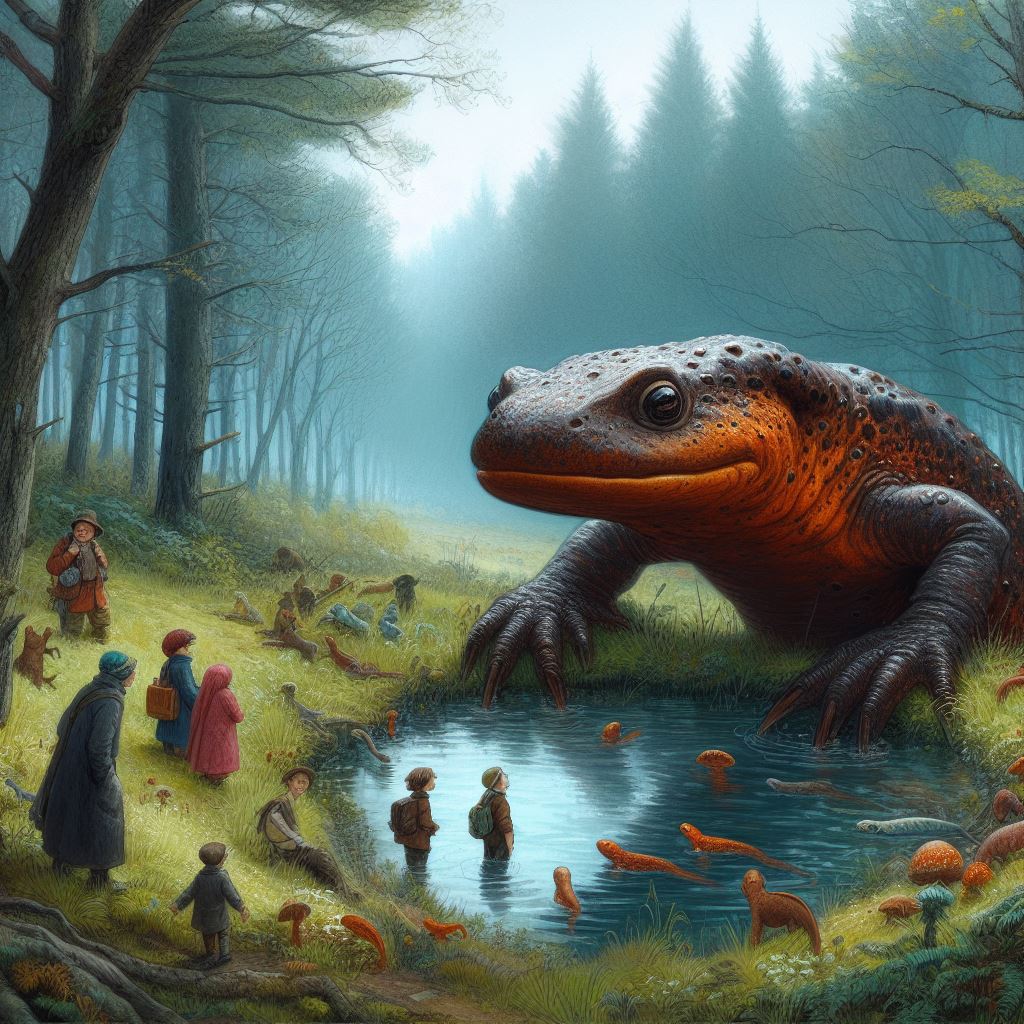
What if we ask a rough-skinned newt, assigning it greater importance than is customary?

To prevent the reader from wondering if they have the wrong blog, I will warn that this post starts in an unfamiliar voice. In some respects, it reflects a younger me. But mostly it channels views familiar to modernity, by no coincidence.  We start with a guy (of course) hogging the microphone.

Space is cool. Astronauts are badass. Maybe me too, someday.

What we’ve learned is amazing—we have tamed so much—our reach and control are ever-increasing.

Information and analysis are accelerating: we’re on our way to mastering everything.

We have learned to outmaneuver all limits. Nothing can stop us from having it all—even immortality may be in the cards soon.

We are so lucky to have pulled ourselves out of the muck—no longer mere animals.

We are so lucky to be as clever as we are: ingenious innovators.

We are so lucky (and brilliant) to have found the fossil fuels that powered our ascent—but that’s just the start.

What’s this you say? Growth can’t go forever on a finite planet?

Well, not to worry: did I mention that space is cool, and that it is in our nature to skirt past limits?

What’s that? Space colonization is a juvenile fantasy, you say?

No, I can’t prove that it’s destined to happen. But why would the burden of proof be on me, when it’s so obvious that’s where we’re heading? What relevance is it that we have no examples even remotely close to sustainable living in space over long durations?

What’s this? Fossil fuels are finite and likely to decline this century?

No matter. Renewable energy: solar, wind, nuclear!

Don’t be a pest. It’s beside the point that nuclear is not renewable—you know what I mean: unlimited energy awaits. Fusion, then.

Wait: too many things at once:

  1. Of course unlimited energy is a great thing—why the hell wouldn’t it be?
  2. Why should it be relevant that we’ve never built solar panels or wind turbines without fossil fuels?
  3. What does it even matter if these technologies use ten times the mined resources as fossil fuels? Earth is enormous.
  4. Surely, you jest that we don’t have ways to make concrete and steel, carry on our mining practices, support air travel and global shipping without fossil fuels. I can probably find a cute demonstration blasting each of these, or at least imagine them—which is theoretically enough.
  5. I don’t understand the relevance of your point that most of our 8 billion people are fed by the fruits of fossil fuels for fertilizer and mechanization: we’ll just do something different/better!

So don’t get hung up on fossil fuels! Yes, they are causing climate change, but that’s just another hiccup that we’ll master and tame in the usual heroic fashion: just look at the explosion of solar and wind and electric cars (now roaring up to a few percent penetration!). We’re lucky, remember! Fossil fuels are just a stepping stone to an even richer future. Failure is not an option, say I: we’re increasingly capable and increasingly in control. Our destiny is clear: just look at how far we’ve come! This trajectory must continue. To think otherwise ludicrously ignores a centuries-long trend—even if you do claim to rest your argument on biophysical reality and not on an inheritance-spending extrapolation lasting only a handful of human lifetimes. It’s only your toxic (lack of?) imagination and lack of faith that threatens our greatness: we have to believe in order to mold reality to our dreams.

Hey—how dare you! Give. Me. (grunt) Back. That. MICRoph…

Continue reading

Views: 3960

Ecological Cliff Edge

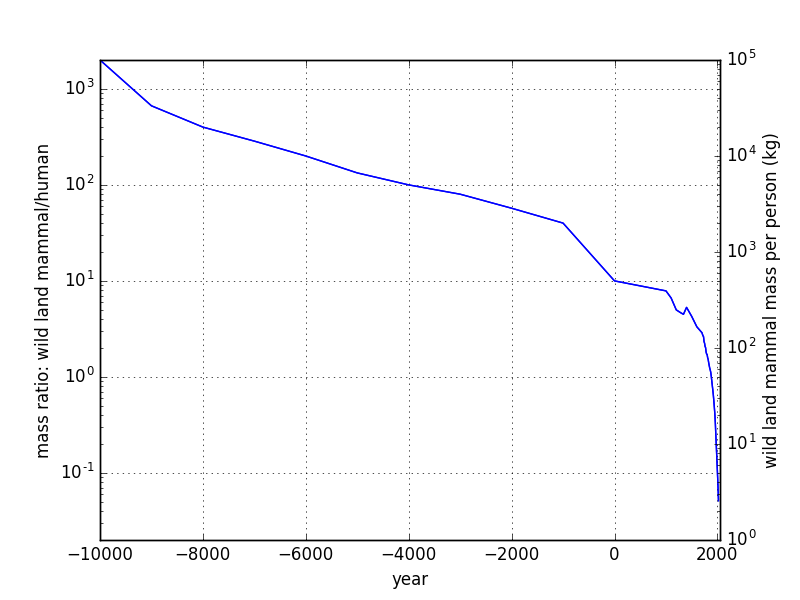
The numbers had already left impressionable marks on me, and as they swirled in my head for some months I certainly had a sense for the urgent warning they wanted me to hear. But it wasn’t until I rubbed the numbers together that the message really rang out. Then plotting the historical evolution shook me anew.  I was staring at the ecological cliff we appear to be driving over.

Let’s build the punchline from a few facts that were already rattling around in my head. Human population, at 8 billion today, was 1 billion around the year 1800. At a global average human mass of 50 kg, that’s 400 Mt (megatons) of humans—matching the 390 Mt I had seen in a superb graphic from Greenspoon et al., shown later in this post. This same graphic shows wild land mammal mass at 20 Mt today. I also knew that wild land mammal mass was about 4 times higher in 1800, and 5 times higher 10,000 years ago.

Put these together, and what do you get? In 1800, every human on the planet had a corresponding 80 kg of mammal mass in the wild. Wild land mammals outweighed humans in an 80:50 ratio.

Today, each human on the planet can only point to 2.5 kg of wild mammal mass as their “own.”

Let that sink in. You only have 2.5 kg (less than 6 pounds) of wild mammal out there somewhere. A single pet cat or dog generally weighs more. Not that long ago, it was more than you could carry. Now, it seems like hardly anything!  I especially fear the implications for mammals should global food distribution be severely crippled.

The graph is even more alarming to me.

Mass ratio (left axis) and total mass (right axis) of wild land mammal mass per person on the planet.  Note the logarithmic vertical axis, as is necessary to show the wide range of values.

The vertical scale is logarithmic in order to show the enormous range involved. The precipitous drop in the present age is staggering. How can we look at this and think that we’re heading in the right direction? That’s modernity for you, folks.

Continue reading

Views: 9740

Here We Are

I was asked some months ago by the Australian Foodweb Education organization to participate in their Here We Are project. The idea is to reflect on the statement: “Here we are, alive, at this moment, in this place, together.”

Over the course of several months, I occasionally tried a written-form response, which might later form the basis for a recording. But I was never quite happy with the result—in part because my viewpoint has been rapidly evolving, making it hard to be completely satisfied.

Finally, in April, I felt ready. So I sat on a grassy slope in La Jolla soaking in a chorus of frog song and jotted down bullet points in some semblance of order. I am not talented enough to read a script without it sounding like I’m reading a script, so kept it light. But when I got to my office to make a recording, I wrote the prompt on my whiteboard and realized I could dissect the sentence in a way that captured my perspectives pretty well. I was able to adapt most of the frog-inspired points into something that seems well designed, but in truth emerged rather rapidly.

For my zoom-recorded session background, I chose from the two or three stock images one that both reminds me of the grassy slope where I committed ideas to paper, and fittingly puts me in my place with respect to nature.

Okay—that’s enough backstory. Here is the video recording, and what follows is a relatively faithful transcript, removing a surprising number of “ums” and “you knows,” and patching up a few things with [insertions]. It’s not as polished as a written work, but it is what it is. I did take the liberty of inserting two bits that it pains me not to have included in the recording, which I represent in green font.

Continue reading

Views: 4116

Death by Hockey Sticks

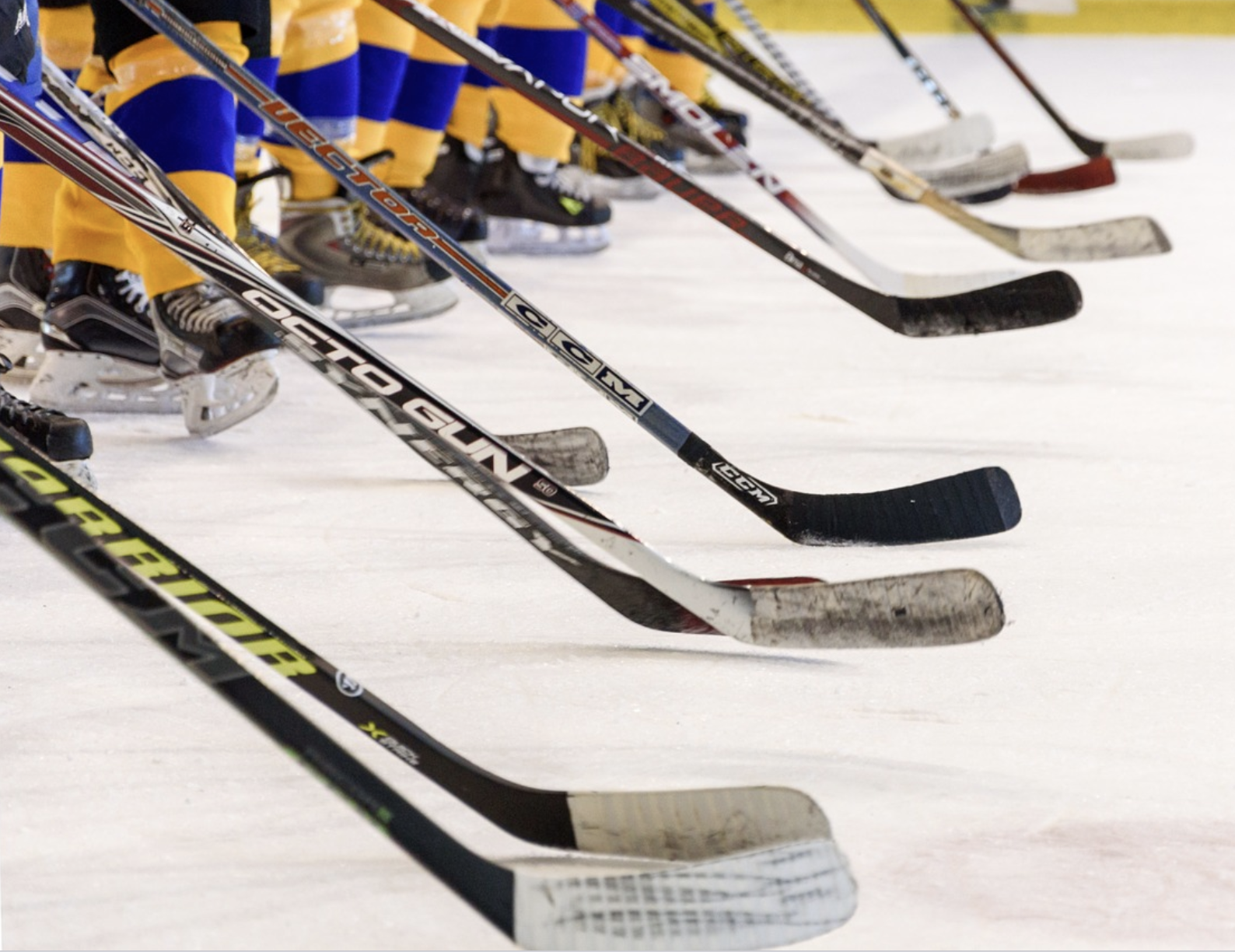
hockey sticks

Courtesy Pixabay (PhotoMIX-Company)

You may be familiar with the term “hockey stick curve,” used describe a trend that has been flat/stable for a very long time, but shoots up at the end of the series in dramatic fashion, resembling the shape of a hockey stick. Hockey can be a violent sport, and it’s easy to get hurt by even one well-aimed swing. Today’s world is being battered from all sides by countless hockey sticks. Mostly, they seem to be targeting Earth’s critters, who are getting bludgeoned unsparingly. But in the end, we’re only harming ourselves.

This post is structured as a gauntlet of hockey stick curves that may leave the reader feeling a bit bruised. Depending on what’s being plotted, many of the graphs shoot up like an exponential, but a few are careening downwards. A theme emerges: the “bads” go up, and the “goods” go down—and not by coincidence.

Continue reading

Views: 77811

In Breach of Contract

Image by Edar from Pixabay

Evolution is like a lengthy job application process. Each new species endures a long and harsh vetting procedure to judge what role it plays in the ecosystem, how prepared it is to deal with lean years, predators, disease, climate variations, and anything that might reasonably be expected to arise even once in a thousand generations. Those species not able to satisfy the impartial judges of nature are voted off the island. It’s a tough crowd.

The successful species—the ones that have held on for many thousands of generations—essentially have signed a contract with nature. The contract is implicitly a “common law” arrangement: if you’ve stayed with us this long, you’re (indifferently) accepted as part of the family.

The terms of the contract are also implicit: as long as you continue to operate within the parameters by which you were judged to be adequate members of the ecosystem, you enjoy the built-in protection of that same ecosystem to continue survival, having carved out a role integrated into the rest by a complex web of interdependencies.

Humans signed our contract with evolution based on a primitive lifestyle that persisted for hundreds of thousands of years. We also inherited clauses from ancestor species, whose capabilities we incrementally altered, thus extending the vetting span to millions of years.

Humans today stand in gross violation of our pact with nature. We are egregiously in breach of contract. Our protections are thereby revoked.

Continue reading

Views: 8027

Earth's Real Treasure

Image by Gordon Johnson from Pixabay

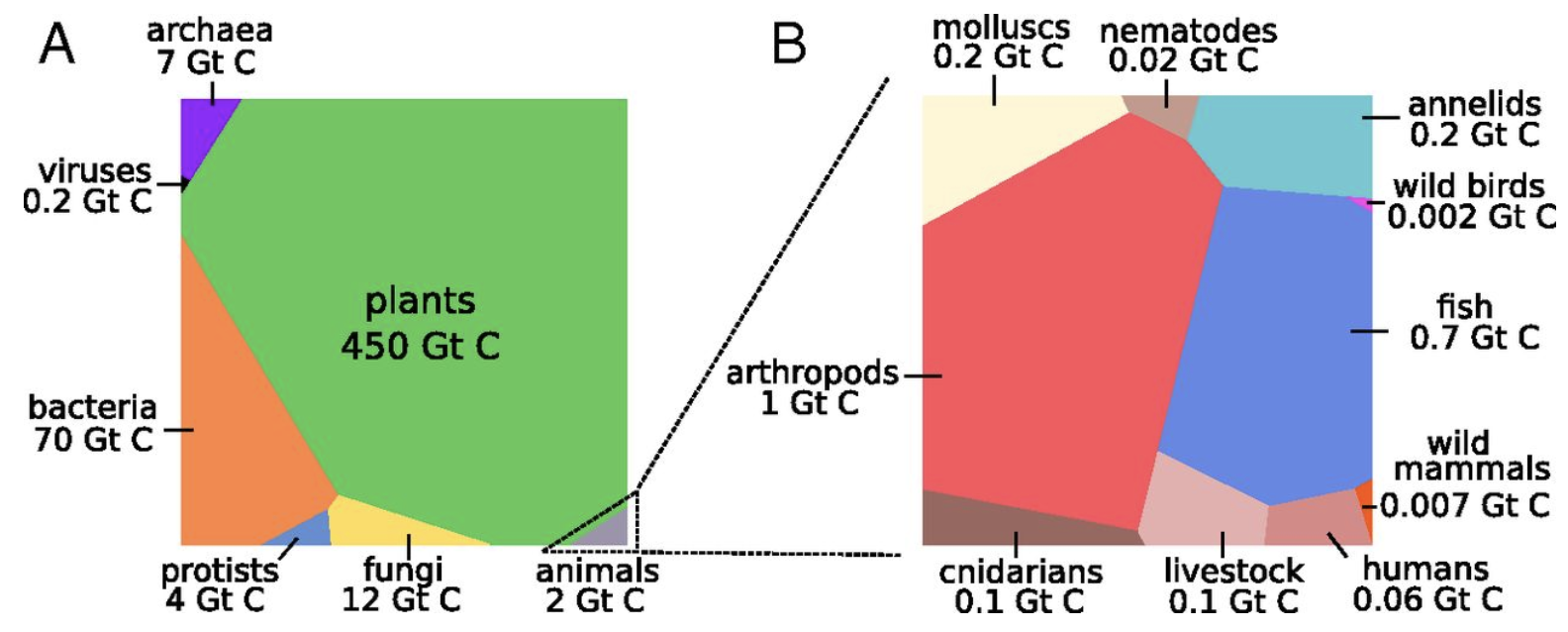
A 2018 paper by  Bar-On, Phillips, and Milo in PNAS contains a fascinating figure (Figure 1) that bears staring at for some time. It shows the dry carbon biomass distribution of various forms of life on Earth. Plants account for 450 Gt (giga-ton; 1012 kg) of mass, while the sum of all animals adds to 2.5 Gt. Humans comprise only 2.4% of animal mass on the planet, but that’s almost ten times as large as wild mammal mass. Add human livestock (outweighing human mass) and wild mammals are only 4% of the human-livestock-mammal trio.

But this post is heading somewhere else: lament about the un-wilding of the planet on your own time (kidding aside, please do!). Let’s start by considering the following question. Which do you think is more valuable: the web of living animals on this planet, or all the gold accessible in the ground? If given a choice to eliminate one and preserve the other, which would you choose? Gold, among Earth’s mineral stocks, is used for this question because it has served as a physically-based monetary standard for many cultures throughout time.

What follows has absurd elements to it, but hopefully in forgivable service of a larger point about the value of life on this planet and in shining a glaring spotlight on current human values.

Continue reading

Views: 7532

Sir David Nails It

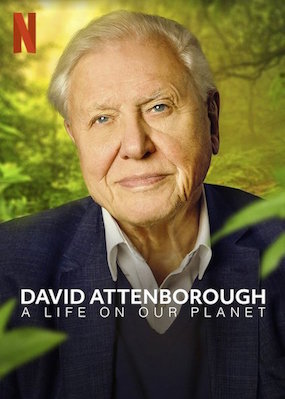
David Attenborough for A life on Our Planet

This is the TV poster for “David Attenborough: A Life on Our Planet.” (CNS photo/Netflix)

If you have not already watched A Life on Our Planet, serving as a witness statement from Sir David Attenborough, please find a way to do so. During his experience-rich lifetime, Attenborough has had a front row seat to the steady whittling down of nature. Any contemporary nature show will justifiably sound the climate change horn, as A Life on Our Planet does as well. But Sir David digs deeper, as few tend to do, and scoops up the essence of the matter.

I have now watched the show three times. The first instance resonated strongly with recent revelations and writings of my own, and I gladly watched it a second time with my wife. The third time, one hand hovered over the pause button while the other scribbled notes and captured key quotations. This post delivers said quotes and connects them to themes dear to my heart. Note: the quotes in the show are delivered verbally, so any formatting emphasis is my own.

Continue reading

Views: 13421