MM #5: Our Biological Inheritance

This is the fifth of 18 installments in the Metastatic Modernity video series (see launch announcement), putting the meta-crisis in perspective as a cancerous disease afflicting humanity and the greater community of life on Earth. This episode extends the point from Episode 3 that we owe almost everything to life that came before us. All our senses and capabilities are inherited. We would be nothing without our older brothers and sisters on this planet.

As is the custom for the series, I provide a stand-alone companion piece in written form (not a transcript) so that the key ideas may be absorbed by a different channel. The write-up that follows is arranged according to “chapters” in the video, navigable via links in the YouTube description field.

Continue reading

Views: 2059

MM #4: Evolution

This is the fourth of about 17 in the Metastatic Modernity video series (see launch announcement), putting the meta-crisis in perspective as a cancerous episode afflicting humanity and the greater community of life on Earth. This episode addresses the more subtle and under-appreciated aspects of evolution, which acts on the whole community of life in full ecological context.

As is the custom for the series, I provide a stand-alone companion piece in written form (not a transcript) so that the key ideas may be absorbed by a different channel. The write-up that follows is arranged according to “chapters” in the video, navigable via links in the YouTube description field.

Continue reading

Views: 2205

Inexhaustible Flows?

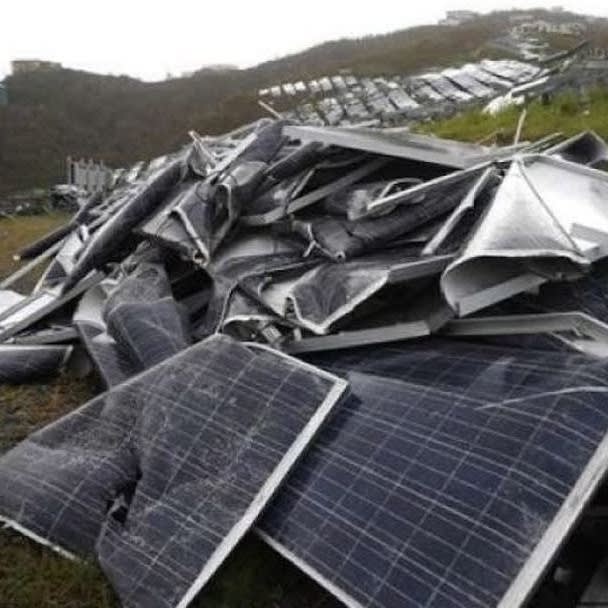
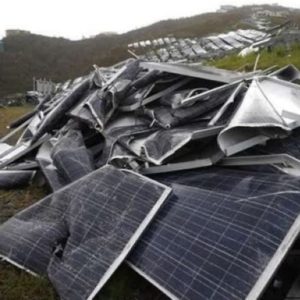
Photo from Monash Universiry

I recently came across a statement to the effect that once we transition away from fossil fuels to renewable energy like solar, wind, and hydro, we would essentially be home free for the long run—tapping into inexhaustible flows. It is a very pleasant notion, to be sure, and one that I believe is relatively common among enthusiasts for renewable energy.

Naturally, I am concerned by the question of: what magnificent things would we do with everlasting copious energy? As an excellent guide, we can ask what amazing things have we done with the recent bolus of energy from fossil fuels? Well, in the course of pursuing material affluence, we have eliminated 85% of primeval forest, made new deserts, created numerous oceanic dead zones, drained swamps, lost whole ecosystems, almost squashed the remaining wild land mammals, and initiated a sixth mass extinction with extinction rates perhaps thousands of times higher than their background levels—all without the help of CO2 and climate change (which indeed adds to the list of ills). These trends are still accelerating. Yay for humans, who can now (temporarily) live in greater comfort and numbers than at any time in history!

But the direction I want to take in this post is on the narrower (and ultimately less important) technical side. All the renewable energy technologies rely on non-renewable materials. Therefore, inexhaustible flows are beside the point. It’s like saying that fossil fuel energy is not practically limited by available oxygen for combustion, so we can enjoy fossil fuels indefinitely. Or that D–T fusion has billions of years of deuterium available, when there’s no naturally-occurring tritium (thus reliant on limited lithium supply). In a multi-part system, the limiting factor is, well, the limiting factor. Sure, into the far future the sun will shine, the wind will blow, and rain will fall. But capturing those flows to make electricity will require physical stuff: all the more material for such diffuse flows. If that stuff is not itself of renewable origin, then oops. The best guarantee of renewability is being part of natural regeneration (i.e., of biological origin). If solar panels, wires, inverters, and batteries were made of wood and the like: alright, then.

Recognizing that biological organisms—plants and the animals that directly or indirectly draw energy from them—have already figured out how to tap into (essentially) inexhaustible flows—solar, primarily—I became interested in comparing the performance of the human animal to that of a solar panel or wind turbine, in terms of mineral requirements. After all, the biosphere gets by without mining the depths. So let’s dig into the material requirements of life.

Continue reading

Views: 9376

Sustainable Timescales

Image by günter from Pixabay

The word “sustainable” is overused to the point of becoming almost meaningless in our culture. In principle, though, it’s an easy enough concept. Unsustainable things fail: unable to continue indefinitely. By this logic, sustainable implies the opposite of failure: success.

Note that “sustainable” does not mean some mythical equilibrium, which has never existed for life on this planet. The key condition is that major changes are gradual enough to allow ecological adaptation. When they aren’t, we get mass extinctions—even when it takes tens or hundreds of thousands of years for the precipitating changes to fully develop.

So, step one in assessing sustainability is to ask: what can continue without failing? But the question needs an associated timescale to be meaningful. This post explores timescales on which it makes sense to assess sustainable practices.

Continue reading

Views: 4642

A Religion of Life

Image by Karen .t from Pixabay

The following discussion about belief systems may seem out of place coming from a recovering astrophysicist, and perhaps I am as surprised as you are. But my path has taken me to an unexpected place, so that I now think we would be wise to make a radical course change at the deepest level of what we believe.

Why should we consider a major change?

  • Because we don’t know everything, and never can.
  • Because what we do know tells us we’re on the wrong track, initiating a sixth mass extinction—not just from CO2, but from modernity itself.
  • Because we now (collectively) believe in the wrong things, like human supremacy and economics (gross).
  • These beliefs are actively hurting the living creatures of the planet, including us.

Science has revealed so much about the origins and rules of the universe, and how life came to be so exquisitely diverse. Let’s tap into what this tells us. Let’s also acknowledge that mysteries will always remain. Rather than continue to be paralyzed in this urgent time by what we don’t yet know, let’s fill in the gaps with belief—or even faith—rooted in the science we already do know. Let’s move beyond the current stories we tell ourselves in modernity, and fashion new ones that move us in a better direction—to the enduring benefit of all life on Earth.

I’m not sure I know how to tell this story, so please bear with me and accept my apologies for a long-ish read. For those who saw last week’s post, this one contains familiar echoes, but represents a fresh approach intended for a more general audience.

Continue reading

Views: 6925

My God: It's Evolution!

I never thought it would happen to me, but I’ve had a divine revelation, of sorts. Have you heard the good news?

While being brought up in a Methodist church, and educated for 8 years in Catholic schools (where I went to mass five days a week for the first three years), I abandoned Christianity midway through high school—tentatively traversing an agnostic phase on my way to calling myself an atheist. Now I eat babies and make my clothing out of puppy skins. Just kidding: I am playing off childish myths about atheists, though I now recognize how completely ludicrous and backwards this perception is. Atheists actually eat puppies and use baby skin for clothing. Ah—I can’t stop kidding around.

I’ll skip over all the physics training, astrophysics exposure, outdoor experiences, etc. that contributed to my worldview. Suffice it to say that I found no shortage of phenomena in the world worthy of awe and appreciation. It was all the more amazing to reflect on the simple origins of everything and the emergence of astounding complexity—especially in the spectacle of life. To me, the idea that our biodiverse world rests on a relatively simple set of physical laws makes the outcome FAR more interesting and dazzling than does the comparatively unimaginative invocation of a sentient creator.

The revelation at hand did not arrive all at once. An initial grounding is partly contained in the reading journey I laid out some while back. Most importantly, the writings of Daniel Quinn (who lived for a time in a monastery aiming to be a hard-core Trappist monk) played a major role—recently reinforced by Alex Leff’s excellent podcast treatment of Ishmael. The revelation finally matured in the context of my post from last week on free will, and the illuminating responses it generated.

Continue reading

Views: 5574

A Story of Mice (and Men)

Picture a natural prairie, boasting an explosive diversity of grasses and flowers. Every year, at different times of the year, the grasses and flowers produce seeds. Some of these seeds, naturally, propagate their respective species so that the grasses and flowers will survive into the next year and the next.

But the plants are generous, generating more seeds than are necessary. Being the only form of life on the prairie capable of harvesting solar energy and turning it into food, they know they have sole responsibility for supporting their entire community. And why would they want to share their wealth? Well, they rely on insects for pollination, fungi for trading nutrients, worms for turning the soil, birds for spreading seeds far and wide, mice for planting their seeds and providing rich fertilizer, and on and on. Open-ended generosity pays back via other gifts in a spirit of reciprocity.

The mice in the prairie have done well for countless generations. While they are capable of explosive reproduction, they can’t expand willy nilly because food resources are limited: if they overgraze, fewer plants will survive into the following year. Meanwhile, hawks, owls, foxes and snakes are always looking for a snack. And so the prairie has settled on a roughly stable mouse population that works in concert with the rest of the ecological community. The population of mice (and of their predators) is not rock-solid: it fluctuates from year to year, but seldom strays very far before self-correcting. When mice are few, their predators diminish, seed abundance goes up, and the stage is set for a resurgence.

Then one day a foraging mouse notices a new hole at the base of an abandoned silo on the edge of the prairie that’s been dormant and irrelevant for all these years. Out of this hole some grains of wheat have spilled out. Tasty! Excited by her find, she brings her friends and they all have a feast. Within weeks, the mice are growing in number and exploiting this seemingly endless resource. All troubles would appear to be over.

Continue reading

Views: 3457

Nothing, Without Bugs

Image by Ron van den Berg from Pixabay

A while back I wrote a post pointing out a way to see that animals are worth more than their weight in gold. The concept was cute, but not fully defensible in detail. Yet, the many orders-of-magnitude difference in market value of animals vs. their gold-equivalent value at least indicated that we might have something wrong, on the basis that we can’t live without the animals, but could live without gold.

In this post, I will follow a similar path to arrive at what I think is even a more stark result: that the economic value of arthropods (e.g., insects) is something like $10,000 per kilogram. To get here, we need to first preview the numbers.

Dry carbon biomass on Earth, from Bar-On, Phillips, and Milo; PNAS 115, 6506, 2018.

A look at Figure 1 in a 2018 paper by Bar-On at al. (reproduced above) shows that Planet Earth hosts 2.4 Gt (giga-tons) of animals, in terms of dry carbon mass. The largest block within the animal kingdom is arthropods (includes insects, spiders, centipedes, and crustaceans), at 1 Gt. Fish are nearly as big, at 0.7 Gt. By contrast, wild mammals are only 0.007 Gt, and wild birds are a comparatively tiny 0.002 Gt.

I have pointed out before that humans now vastly outweigh wild mammals, to the point that we only have 2.5 kg of wild land mammal mass left per human on the planet (presently plummeting). Note that this is a “wet” mass figure, whereas the numbers above are dry carbon mass (about 15% of wet mass).

The trends are falling fast: insect, bird, mammal, amphibian, and fish populations are losing ground to the tune of 1–2% per year, amounting to halving populations over a handful of decades [late addition: good article on subject]. Inevitably, then, extinctions are up a thousand-fold, and increasing. This is decidedly not good, and perhaps the most glaring sign that modernity is a literal dead-end path.

The approach here is to assume that Earth’s ecology would crash without any arthropods. The same might be said for fish, or birds, or any major group. Bugs (an informal catch-all substitute for arthropods here) are particularly attractive to me for this exercise because they are so crucial in terms of food for others, soil conditioning, pollination—and other services—that it is hard to believe other phyla could carry on without them. Evolution produces a complex interconnected web that cannot be expected to maintain its overall integrity if surgically plucked apart in this way—much as an organism cannot be expected to survive if completely removing any one of many key organs.

Therefore, no bugs, no humans. No them, no us. The same argument could probably be made for other phyla, producing slightly different quantitative results than what follows, but the same in spirit.

Continue reading

Views: 3021

Deer in the Headlights

Too late to stop. Must hit deer or car. Pick a lane.

Do the Math readers have surely noticed a new bone I like to gnaw of late: human supremacy. For me, this started in early 2022 with a post that I called at the time Human Exceptionalism. Since then, I recognize that humans are indeed exceptional, as are other species—each in their own ways. In the 20 months since writing the “exceptionalism” post—bolstered by things I’ve read in the interim—my sense has only strengthened that the perception of separateness began in earnest when we started mastering land and beast via agriculture and herding, became far more pronounced during the Enlightenment, and now is the chief engine behind modernity and the meta-crisis. I recommend a magnificent book chapter by Eileen Crist from 2015 (republished at Resilience) that was missing from my life these past 8 years. At this point, I would far sooner try to address the root problem of human supremacy than engage in any talk of technology—which simply becomes a tool to effect human supremacist aims to the ultimate detriment of all..

If we could somehow stamp out human supremacy, I believe that humans would spontaneously organize differently, prioritize the more-than-human world, begin to place more value on the far future, set aside science/technology fetishism to focus on deeper values, and—in short—become wiser. Many of the ills caused by modernity would simply melt away under a new worldview, accompanied by a complete overhaul of how we think, know, and live. Many of the actions of today would seem unthinkable and repulsive under a non-supremacist worldview.

So how might we stamp out human supremacy? One step is to employ tools that help us recognize it in ourselves. Are you a human supremacist? I was. No doubt I still harbor aspects of the scurrilous affliction, embedded as I am within modernity. My apologies (and respect) if you happen to be the rare bird who has escaped the cage, but the safest assumption for now is that you are indeed a human supremacist—whether you recognize it or not—as that’s what our culture produces en masse. If you don’t like the suggestion that you’re a human supremacist, then good! That’s a great starting place, and I could hardly ask for more. Most racists bristle at being called racist, which is adorable in a contemptible sort of way.

This post proposes a crude test for deep-seated human supremacist attitudes. It has echoes of the classic “trolley problem,” and I hate myself for that. But the setup is not as hypothetical or unlikely. Also, rather than the intractable weighing of (sacred) human lives against action/inaction, I think this one has a clearer logical resolution.

The Scenario

Two cars rapidly approach each other on a two-lane road that for a short span has no shoulders (e.g., guard rails, steep bluffs). Shortly before the cars reach each other, a large deer suddenly pops out into one lane and freezes. It is too late to brake in time to avoid hitting the deer, so the only choice on the part of the unlucky driver is to plow into the massive deer at windshield height or swerve into the oncoming car for a destructive head-on collision and near-certain death of those in both cars. In order to bypass the effect of self-preservation, let us stipulate that the driver in the lane with the deer will die either way, and knows this. Which choice makes sense? Is it obvious to you?

Continue reading

Views: 3191

Are WE Lucky?

What if we ask a rough-skinned newt, assigning it greater importance than is customary?

To prevent the reader from wondering if they have the wrong blog, I will warn that this post starts in an unfamiliar voice. In some respects, it reflects a younger me. But mostly it channels views familiar to modernity, by no coincidence.  We start with a guy (of course) hogging the microphone.

Space is cool. Astronauts are badass. Maybe me too, someday.

What we’ve learned is amazing—we have tamed so much—our reach and control are ever-increasing.

Information and analysis are accelerating: we’re on our way to mastering everything.

We have learned to outmaneuver all limits. Nothing can stop us from having it all—even immortality may be in the cards soon.

We are so lucky to have pulled ourselves out of the muck—no longer mere animals.

We are so lucky to be as clever as we are: ingenious innovators.

We are so lucky (and brilliant) to have found the fossil fuels that powered our ascent—but that’s just the start.

What’s this you say? Growth can’t go forever on a finite planet?

Well, not to worry: did I mention that space is cool, and that it is in our nature to skirt past limits?

What’s that? Space colonization is a juvenile fantasy, you say?

No, I can’t prove that it’s destined to happen. But why would the burden of proof be on me, when it’s so obvious that’s where we’re heading? What relevance is it that we have no examples even remotely close to sustainable living in space over long durations?

What’s this? Fossil fuels are finite and likely to decline this century?

No matter. Renewable energy: solar, wind, nuclear!

Don’t be a pest. It’s beside the point that nuclear is not renewable—you know what I mean: unlimited energy awaits. Fusion, then.

Wait: too many things at once:

  1. Of course unlimited energy is a great thing—why the hell wouldn’t it be?
  2. Why should it be relevant that we’ve never built solar panels or wind turbines without fossil fuels?
  3. What does it even matter if these technologies use ten times the mined resources as fossil fuels? Earth is enormous.
  4. Surely, you jest that we don’t have ways to make concrete and steel, carry on our mining practices, support air travel and global shipping without fossil fuels. I can probably find a cute demonstration blasting each of these, or at least imagine them—which is theoretically enough.
  5. I don’t understand the relevance of your point that most of our 8 billion people are fed by the fruits of fossil fuels for fertilizer and mechanization: we’ll just do something different/better!

So don’t get hung up on fossil fuels! Yes, they are causing climate change, but that’s just another hiccup that we’ll master and tame in the usual heroic fashion: just look at the explosion of solar and wind and electric cars (now roaring up to a few percent penetration!). We’re lucky, remember! Fossil fuels are just a stepping stone to an even richer future. Failure is not an option, say I: we’re increasingly capable and increasingly in control. Our destiny is clear: just look at how far we’ve come! This trajectory must continue. To think otherwise ludicrously ignores a centuries-long trend—even if you do claim to rest your argument on biophysical reality and not on an inheritance-spending extrapolation lasting only a handful of human lifetimes. It’s only your toxic (lack of?) imagination and lack of faith that threatens our greatness: we have to believe in order to mold reality to our dreams.

Hey—how dare you! Give. Me. (grunt) Back. That. MICRoph…

Continue reading

Views: 3937